Preparing for Ducklings
When you first bring ducklings home, they will need a safe, warm brooder during the first several weeks of their lives. How long they require supplemental heat depends on their age, feather development, breed, and the outdoor temperature. Don’t rush them outside simply because they are a couple of weeks old. Young ducklings are not yet fully insulated by feathers and can become chilled very quickly.
This is especially important if you live somewhere with cold spring temperatures. Wait until your ducklings are sufficiently feathered and able to handle the outdoor conditions before moving them outside permanently. The duck stage is not an easy one and personally, I find it the hardest. They require several times a day, bedding cleaning, clean water, food refill.
Ducklings need warmth, but they also need enough room to move away from the heat whenever they become too warm. Never heat the entire enclosure so much that they have nowhere cooler to go. If ducklings are constantly huddled together near the heat source, they may be too cold. If they stay as far away from it as possible, they may be too warm. Comfortable ducklings will usually move freely throughout their enclosure. Overheating can be just as dangerous as allowing them to become chilled.
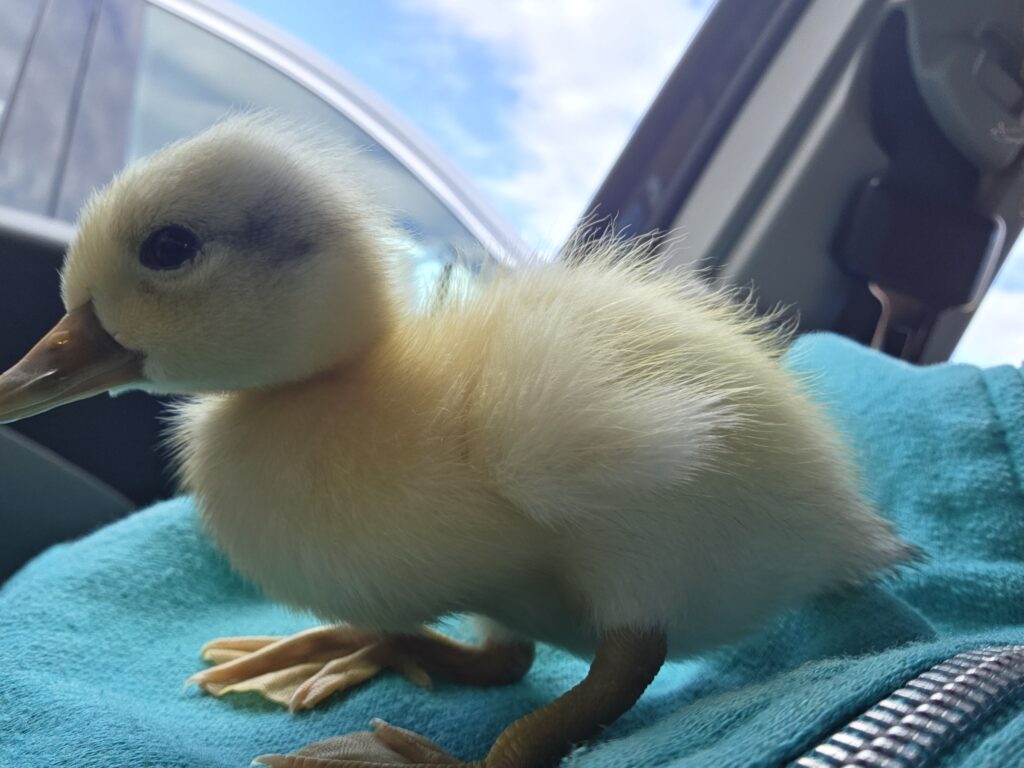
Whatever heating method you use, make sure it is stable, carefully monitored, and protected from tipping or coming into contact with bedding or other flammable materials. Ducklings grow surprisingly fast, become very active, and make an incredible mess with their water, so electrical equipment should always be kept well away from anything wet.
A properly designed duckling brooder gives young ducks a warm, dry, draft-free place to grow during their first few weeks of life. Ducklings grow incredibly fast and are much messier with water than chicks, so a good setup needs plenty of space, absorbent bedding, safe heat, fresh water, and frequent cleaning.
| Age | Approximate warm-area temperature |
|---|---|
| First week | 90–95°F |
| Second week | 90°F |
| Third week | 80°F |
| Fourth week | Around 70°F |
| Afterward | Gradually reduce as feathering and conditions permit |
The temperature should generally be reduced about 5°F each week, but the ducklings themselves are one of your best thermometers. Ducklings crowded tightly beneath the heat are probably cold. Ducklings continuously trying to escape the heated area may be too warm. Comfortable ducklings normally spread themselves around the brooder.
Heat plates can be a convenient alternative to heat lamps. If a lamp is used, secure it independently with a chain or similar support rather than relying on the electrical cord. Heat lamps can cause devastating fires when they fall into bedding.
Choosing a Brooder
You do not need an expensive commercial brooder. A large plastic tote, stock tank, kiddie pool, wooden enclosure, or similar container can work as long as it is secure, well ventilated, easy to clean, and large enough for the ducklings to move away from the heat source.
The brooder should be located somewhere protected from drafts and predators. Metzer Farms recommends starting with roughly 1/3 square foot per newly hatched duckling, but ducklings grow rapidly and will require considerably more room within only a few weeks.
For pet ducklings, I prefer giving them more space than the minimum whenever possible. Extra room makes it easier to separate their sleeping area from their messy water station.
Keeping the Brooder Clean
Ducklings are messy. There really isn’t a way around it.
Check the brooder several times every day, especially around the waterer. Remove soaked bedding and replace it with clean, dry material. Their drinking water should also be refreshed frequently because ducklings will put food, bedding, dirt, and just about everything else into it.
A good brooder should smell mostly like clean bedding. Strong ammonia or sour odors mean it needs attention. A brooder that seems enormous when two tiny ducklings arrive may look ridiculously small two weeks later.
Ducklings grow extremely quickly. Crowding also makes the brooder wetter and more difficult to keep clean.
Socializing Your Ducklings
If you want friendly pet ducks, the brooder period is one of the best times to build trust. Sit near them, speak softly, offer appropriate treats once they are old enough, and handle them gently for short periods. Avoid chasing them around the brooder to pick them up. Instead, move slowly and let them become familiar with your hands and voice. Young ducks are naturally cautious, so consistent gentle interaction is much more effective than forcing contact.
Your duckling will sleep a lot while they are growing—and that is completely normal. Ducklings grow incredibly fast, and all that growing takes a lot of energy! Their quiet, sleepy moments can also be a wonderful opportunity to bond with them.
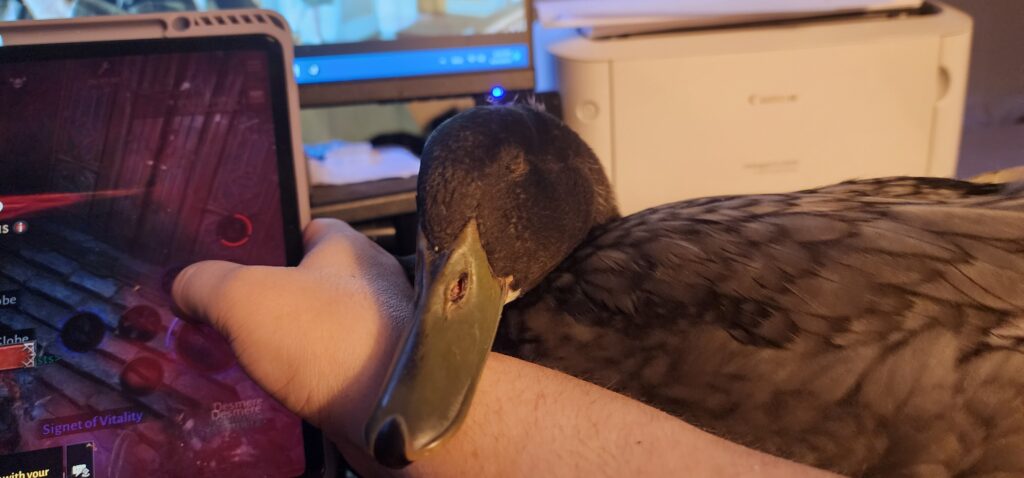
I keep my ducklings inside with me while they are young and until they are fully feathered and ready for outdoor conditions. Because I spend so much time handling and interacting with them, my ducks become very tame. Having a tame duck can make life much easier later on, especially if your duck becomes sick or injured and needs to be examined, treated, or given medication.
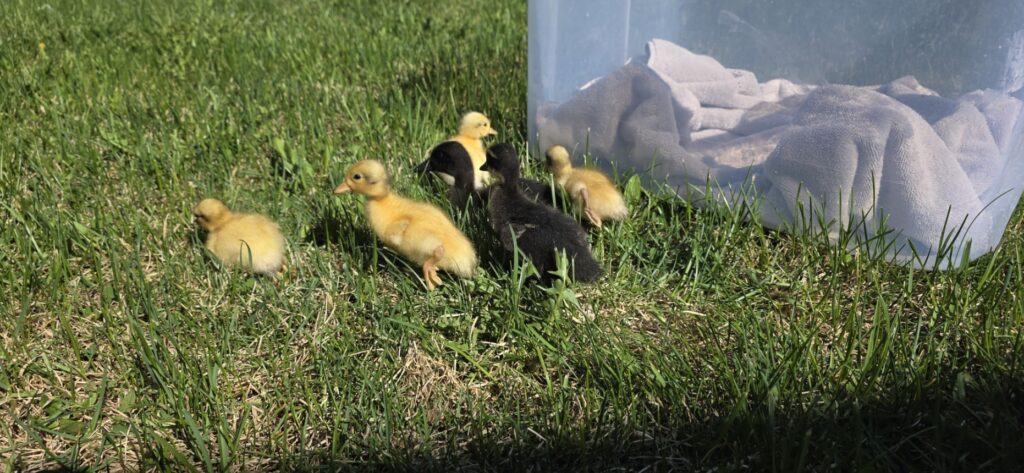
The best way to tame your duckling is simply to spend lots of calm, positive time with them. Talk to them softly so they become familiar with your voice. I like to place an old towel over myself and let my duckling cuddle up and sleep on me during the day. I keep food and water nearby because growing ducklings eat and drink frequently.
While they are resting with me, I gently pet them and talk to them so they become comfortable with both my voice and my touch. In my experience, this is one of the best ways to raise a friendly, trusting duck.
Remember that ducks are naturally cautious animals. Being wary of people, unfamiliar objects, and sudden movements is part of their survival instinct. Avoid making sudden movements around young ducklings because they can startle very easily.
Raising ducklings around normal household activity can also help them gradually become accustomed to everyday sounds, voices, movement, and people. Keep their experiences gentle and positive, and allow them to approach and interact with you at their own pace.
With patience, consistency, gentle handling, and lots of time together, you can build a wonderful bond with your duck.
Duckling Brooder Checklist
Before your ducklings arrive, have these essentials ready:
- Large, secure brooder with good ventilation
- Safe heat source
- Brooder thermometer
- Pine shavings or straw
- Duckling-safe waterer
- Spill-catching water platform or tray
- Waterfowl starter feed
- Feeder
- Plenty of replacement bedding
- Predator protection
- Enough room for a warm and cool area
One of the Most Important Rules
Keep ducklings warm—but give them a way to escape the heat. Keep water available—but don’t let it turn their home into a swamp.
A clean, roomy brooder with dry bedding and a well-designed water station makes raising ducklings much easier for both you and the ducks.
What duckling eat
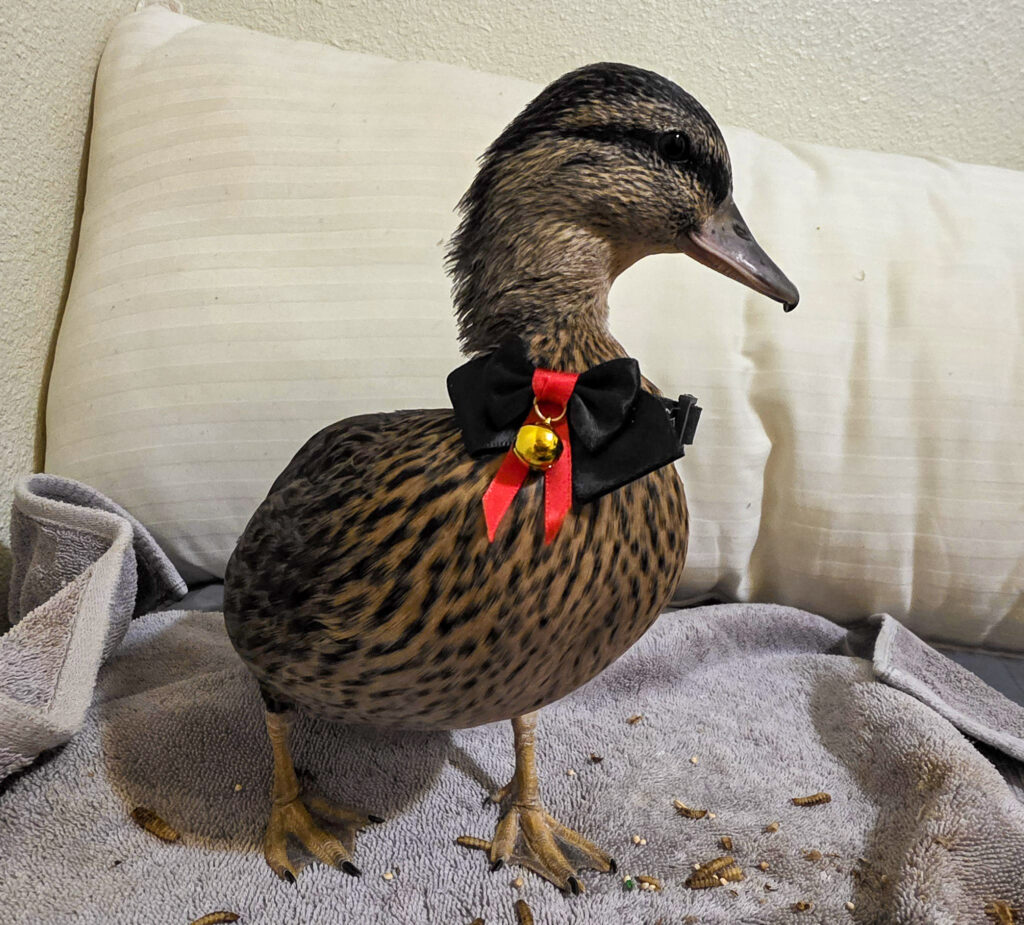
Good nutrition is one of the most important parts of keeping ducks healthy. Ducks grow incredibly fast, especially during their first few weeks of life, so feeding them the proper diet from the beginning is essential for healthy bones, legs, feathers, and overall development.
Whenever possible, feed ducklings a complete starter feed made specifically for ducks or waterfowl. Ducklings have somewhat different nutritional requirements than chicks, particularly when it comes to niacin (vitamin B3). Niacin is especially important for proper growth and development of their legs and bones.
A good waterfowl starter is generally around 20% protein during the first 3 weeks. After approximately 3 weeks, they can gradually transition to a grower ration of pellets containing roughly 17% protein, depending on the feed and breed.
If you cannot find duck feed, some complete poultry or all-flock feeds may be suitable, but always check the label to make sure the product is appropriate for ducks and provides enough niacin.
When feeding a complete duck ration that already contains adequate niacin, you generally do not need to automatically add brewer’s yeast or other supplements. For example, commercial complete duck feeds are formulated with elevated niacin specifically for ducklings.
Bedding For Duckling
During the first week, I like to use old towels, which I often buy inexpensively from thrift stores. They provide a soft, non-slip surface for tiny ducklings and can easily be washed and reused.
As the ducklings grow, I usually switch to wood shavings. If you use shavings, choose an appropriate low-dust bedding such as kiln-dried pine or aspen. Never use cedar, which can be harmful to birds. Whatever bedding you choose, it needs to remain as clean and dry as possible. Ducklings love water, and they have an amazing ability to turn a perfectly clean brooder into a wet mess in what seems like minutes!
My personal, favorite choice is a large plastic kiddy pool. It’s large enough that I don’t have to clean as often, the plastic makes cleaning easier. I would lay about an inch of pine shaving down and leave an empty space where I put the food and water. I usually put the food a little bit further than the water to avoid huge messes and having to replace the water and food often.
They tend to dunk their food in water and vice versa. For cleaning, I would use a nitrile glove and just hand pick the soiled spots. I also attached on the back of a chair a red lamp pointed toward them, to keep them warm. The pool is large enough for them to move away from the heat.

Avoid slick flooring such as bare plastic, cardboard, or newspaper. Young ducklings need a surface that gives their feet good traction; slippery surfaces can contribute to leg problems.
You can also use puppy pads, although they can become expensive quickly when you are changing them frequently. Some ducklings will also peck, tear, or try to eat almost anything they can reach, so keep an eye on them if you use disposable pads and replace damaged ones immediately.
And be prepared for a lot of cleaning. Ducklings splash water everywhere, produce very wet droppings, and can soak their bedding surprisingly fast. Keeping their brooder clean, dry, well ventilated, and warm—but not overheated—is one of the most important parts of raising healthy ducklings.
Before you get your duckling, make sure you have everything ready. Don’t wait until the day that you are getting your duckling because sometimes, it is hard to find food specific for duckling espcially out of season, meaning when it’s not spring. Do not use chick food, especially not medicated ! It does not contain the right nutrient, duckling needs.
Proper Duckling Enclosure
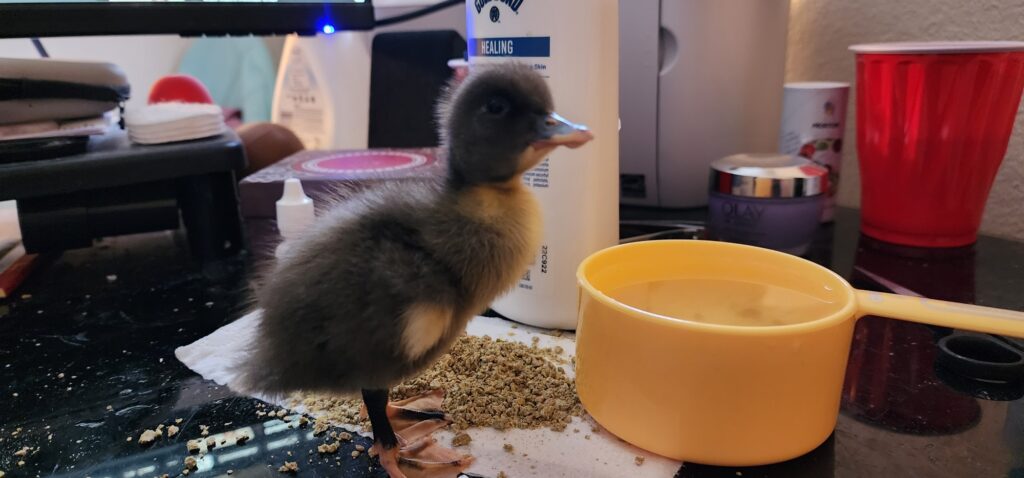
A proper enclosure should have two main areas: a secure nighttime shelter and a larger outdoor run. Ducks are hardy animals, but they are extremely vulnerable to predators and need a clean, dry place where they can rest safely at night.
Once you move your ducks outdoors, you will need a VERY secure enclosure. I can’t count how many times I have seen people losing their animals to predators and this can be avoided, but it can be really expensive. The list is LONG of predators that can kill your friend.
With all these predators above and then more, you not only need a safe day enclosure, but night time shelter. You can’t let your duck roam freely on your acres and hope that your pet will be safe. Just because you never lost one, it doesn’t mean it can’t happen, especially if your ducks are free range.
If you are not willing to spend the amount of money, or time that it takes to build them a proper, safe place, for them to thrive, then like I mentioned earlier, get a dog or a cat, it will save you a lot of money, heartache and time. They are much cheaper than a duck.
It’s frustrating and very sad to see all these poor innocent pet ducks being lost to predators because their owners did not keep their pet safe. “Some people might say: Oh well it’s just a duck. Well it happens, predators do what they are supposed to. Unfortunately, nature is cruel.”
Not everyone is willing to spend a lot of money to keep ducks safe, or take them to the vet when they need it. Remember that animals when we purchase them, don’t have a choice or a say in what we do for them. It is our responsibility to offer them the best life we can. If we are not willing to do that, then as humans, we should just make the better decision to pass on that cute duckling.
Watch them on social media instead, follow people who love their pet ducks and are willing to take them to the vet and keep them safe. You will see that it is not easy to keep ducks as pets, and will help you make a better decision. Vet care for a duck is much more expensive than for a dog or a cat, because they require an avian vet, which are not always availlaible either.
Duckling Water Requirements
This is usually the messiest part of raising ducklings. Ducklings must have continuous access to clean drinking water, and the water should be deep enough for them to immerse their bills so they can drink and clean their nostrils. However, the drinking container should not allow tiny ducklings to easily climb inside and become soaked.
One of the best brooder tricks is creating a raised water station. Put the waterer on a shallow platform or tray that catches spilled water before it reaches the bedding. This simple change can make an enormous difference in keeping a brooder dry.
Niacin and Duckling Nutrition
Proper nutrition during the first weeks of life is extremely important for ducklings. They grow remarkably fast, and their developing bones, muscles, feathers, and nervous system require a well-balanced diet.
One nutrient that deserves special attention is niacin, also known as vitamin B3.
Ducklings require considerably more niacin than chickens. Ducks are less efficient at converting the amino acid tryptophan into niacin, which is one reason they are more susceptible to niacin deficiency when fed diets designed primarily for chicks.
Why Do Ducklings Need Niacin?
Niacin is a water-soluble B vitamin involved in many normal body processes, including:
- Energy metabolism
- Normal growth and development
- Nervous-system function
- Healthy skin and feathers
- Proper development of the legs and joints
Because ducklings grow so quickly, inadequate niacin can cause noticeable problems with their legs and overall development.
For Pekin ducks, established poultry nutrition guidelines list approximately 55 mg of niacin per kilogram of complete feed, while veterinary references describe about 55–70 mg/kg as an appropriate dietary range for ducks and other waterfowl.
Signs of Niacin Deficiency in Ducklings
A duckling that does not receive enough niacin may gradually develop weakness or difficulty walking.
Possible signs include:
- Weak legs
- Reluctance to walk
- Sitting or lying down frequently
- Difficulty standing
- Bowed or abnormal-looking legs
- Enlarged hock joints
- Slow growth
- Poor feather development
- Reduced appetite
- General weakness
Severe niacin deficiency can cause significant bowing of the legs and enlargement of the hock joints.
Leg weakness should never automatically be assumed to be a niacin deficiency. Injuries, infections, developmental abnormalities, nutritional imbalances, slippery flooring, and other medical problems can produce similar symptoms. If a duckling suddenly cannot walk, has swollen joints, seems painful, stops eating, or continues getting worse, an avian veterinarian should be consulted.
The Best Feed for Ducklings
Whenever possible, I recommend feeding a complete starter ration specifically formulated for ducks or waterfowl.
A properly formulated starter provides not only niacin but also the protein, amino acids, vitamins, minerals, calcium, phosphorus, and energy needed for healthy growth.
Nutrition recommendations vary somewhat according to breed, age, and production system. Traditional recommendations for rapidly growing Pekin ducklings list approximately 22% protein during the first two weeks, while veterinary guidance for growing waterfowl commonly places protein requirements around 20–22% or higher depending on the feeding program.
The important point is that ducklings need a balanced complete diet, not simply extra protein or extra vitamins added individually.
Brewer’s Yeast and Nutritional Yeast
You may frequently see recommendations to sprinkle brewer’s yeast or nutritional yeast onto duckling food as a source of B vitamins. These products can contain niacin, but they should not be treated as interchangeable supplements.
Always read the nutritional label.
The amount of niacin in one product may be very different from another, and some products may not provide enough niacin to correct a true deficiency. For this reason, I prefer starting with a properly formulated waterfowl starter feed rather than attempting to build a duckling’s nutritional requirements from supplements.
Don’t Over-Supplement
More is not always better.
Adding multiple vitamin products to an already balanced feed can unnecessarily alter the diet. If your ducklings are eating a commercial waterfowl starter that already contains adequate niacin, additional supplementation may not be necessary.
If you need to supplement because you are using a feed that contains insufficient niacin—or because a veterinarian suspects a deficiency—use a supplement with a known concentration and follow veterinary or manufacturer guidance.
Treats Should Be Limited
During the rapid-growth stage, the majority of a duckling’s diet should come from a complete nutritionally balanced starter feed.
Too many treats can dilute the vitamins, minerals, amino acids, and other nutrients supplied by their regular food. Healthy treats can be offered in moderation as ducklings grow, but they should never replace their primary feed.
If ducklings are eating foods other than their commercial starter, they should also have access to appropriately sized insoluble grit to help them grind food in the gizzard.
Healthy Legs Begin With Good Nutrition
Strong duckling legs depend on much more than niacin alone.
Healthy development also requires:
- Balanced protein and amino acids
- Appropriate calcium and phosphorus
- Adequate vitamins and minerals
- Plenty of clean drinking water
- Dry, sanitary living conditions
- Non-slip flooring
- Enough room to exercise normally
- Appropriate body weight and growth rate
Can Ducklings Swim?
Yes, ducklings can swim, but very young ducklings should only be allowed to swim under close supervision.
Swimming is a natural behavior for ducks and can provide exercise, enrichment, and help young ducklings learn normal water behaviors. However, newly hatched ducklings are not as waterproof as adult ducks, so they can become soaked, chilled, exhausted, or even drown if they are left in water for too long.
Adult ducks have an oil-producing preen gland near the base of the tail. They spread this oil over their feathers while grooming, helping create the water-resistant feather coat that allows them to remain warm and buoyant in water.
Young ducklings do not yet have the same fully developed feather protection as adults. Their soft down can become saturated, allowing water to reach the skin and causing them to lose body heat quickly.
Ducklings raised naturally with their mother may gain some temporary protection from contact with her oils, but hand-raised ducklings do not have this advantage.
When Can Ducklings Start Swimming?
Ducklings can be introduced to very shallow, comfortably warm water at a young age, as long as they are healthy and closely supervised.
For their first swimming experiences:
- Keep the water shallow.
- Use comfortably warm water rather than cold water.
- Make sure the ducklings can easily stand.
- Provide an easy way for them to get out.
- Keep swimming sessions short.
- Never leave them unattended.
A sink, shallow tub, or small container can work well for supervised swimming. For very young ducklings, swimming should initially last only a few minutes. Watch their behavior carefully.
Remove them from the water immediately if they begin to:
- Shiver
- Slow down
- Look tired
- Struggle to stay afloat
- Become completely soaked
- Stop actively swimming
- Have difficulty getting out
Young ducklings can tire surprisingly quickly.
Dry Them After Swimming
After a bath, gently towel-dry young ducklings and return them to a warm, draft-free brooder. Make sure they have access to their warm area until they are completely dry and comfortable. Never place a wet duckling into a cold room or outdoor enclosure.
Young ducklings do not need a pool inside their brooder. A permanent swimming container can quickly soak the bedding, increase humidity, chill ducklings, and create unsanitary conditions.
Their regular drinking water should allow them to submerge their entire bill so they can clean their nostrils, but it should be designed so they cannot easily climb inside and become soaked.
When Can Ducks Swim Without Supervision?
As ducklings grow and develop their juvenile feathers, they become increasingly waterproof and better able to regulate their body temperature. Once they are fully feathered and accustomed to water, healthy young ducks can generally spend much more time swimming.
Even then, their pond or pool should have:
- Easy entry and exit
- No steep or slippery sides
- Clean water
- Protection from predators
- Enough shallow areas for resting
Any artificial pool should have a ramp, steps, rocks, or another secure way for ducks to climb out easily.
Why Swimming Is Good for Ducklings
When done safely, swimming can be wonderful enrichment.
It allows ducklings to:
- Exercise their legs
- Strengthen muscles
- Preen and groom themselves
- Explore natural behaviors
- Splash and forage
- Cool themselves in appropriate weather
Many ducklings absolutely love their supervised bath time.
Important Safety Rule
Never assume that a duckling can safely swim simply because it is a duck.
Young ducklings can become waterlogged, chilled, and exhausted much faster than adult ducks. Always supervise early swimming sessions and make sure they can easily leave the water.