How to Care for Goslings
Today, hatcheries produce day-old goslings, in large numbers. Commercial growers brood and raise them, in about the same way, as baby chicks. Geese are hardy, and are not susceptible to many of the common poultry diseases. This makes them easy to raise and keep. Brooding requirements are simple, and special housing or equipment is not necessary. Because of their rapid growth and early feathering, they do not require as long a brooding period as chicks.
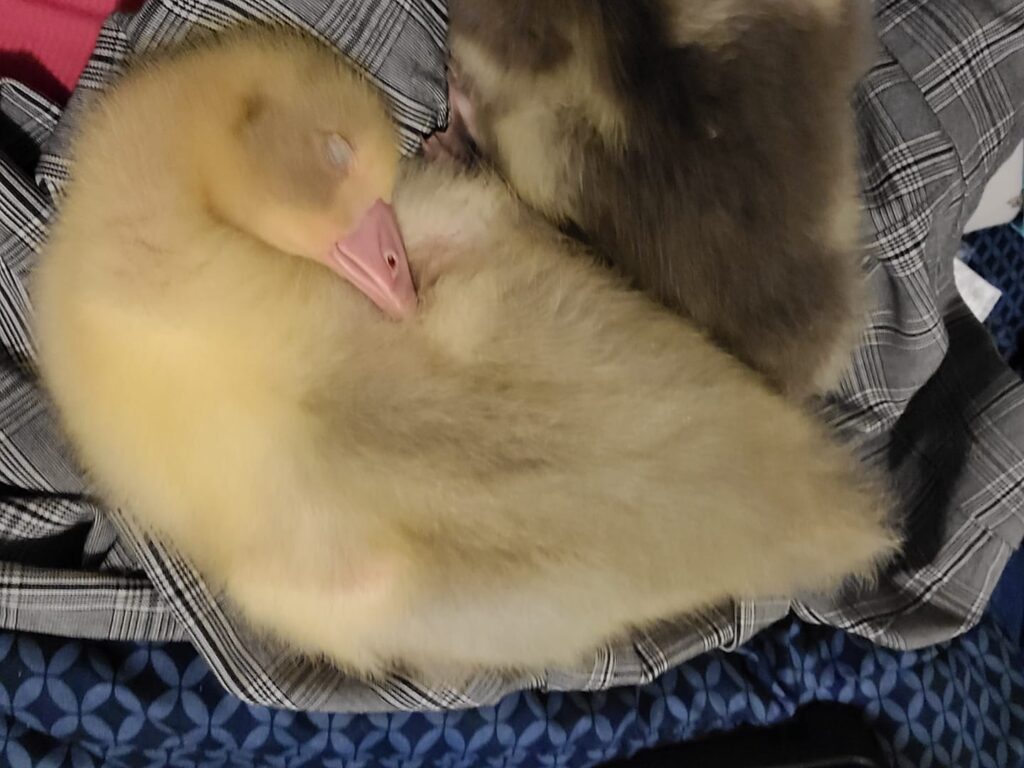
Normally the post office will call you, when your birds arrive, early in the morning, and ask you to pick them up. When you get them home, dip the bill of each bird in water if they are not drinking on their own, as it is the most important thing they need after 2-3 days of shipping.
I always have a packet of electrolytes on hand, when I get my new birds, so that when they arrive, they can get their strength, and are hydrated quickly. Make sure they tip their head back to drink. If they have had a rough journey and seem weak, this will help them a lot. If they look sleepy, this means they are dehydrated.
Goslings are ready for feed and water, when they arrive home. Keep feed for the birds, full at all times, when they are young. They grow really fast and they need to eat very often. Place feed on a flat surface for the first few days, so it’s easier for them to reach. Make sure the feed you are using contains only additives, approved for geese. Certain types of drugs, that are sometimes included in chick starters, for coccidiosis control, are harmful to goslings. They may cause lameness or even death.
Gosling Brooder Setup
Your brooder is the place your goslings will call home, for the first 2 weeks of their life. It is important that it is set up properly for them. Goslings grow quickly, make sure your brooder provides enough space, or they will outgrow it very fast. You will want to allow at least 1.5 square feet per gosling, in your brooder. It can be located inside the house or a barn, garage, as long as the area is protected from drafts, predators (including dogs, cats, rodents), and sudden temperature changes as even drafts can make them sick.
It is important that goslings live in a draft-free environment, with proper ventilation. Drafts and poor ventilation can cause unwanted health problems. Do not place them in cages, with wire bottoms, as this can cause serious feet and beak injuries. Additionally, make sure surfaces are not slippery, as goslings can slip and injure their legs easily at a young age. You can use rubber drawer liners, or rubber mats, on the floor (under their bedding) to ensure a non-slip surface.
Do not overcrowd your birds
That can cause increased bacterial and parasite risk. Because waterfowl can be very messy, you will want to cover the floor, with at least 2 inches of wood shavings, or straw for bedding. I prefer straw in the winter, especially in a non insulated enclosure. Make sure that any bedding materials you use, has not been treated with chemicals, and is mold-free. Keep in mind that if you don’t change the bedding often enough, you might get mites problems as well.
Gosling needs less heat than chicks
The heat needs will depend on ambient air temperature, humidity, and air flow. Unlike chicks that you start off at 95 degrees, you start off at 90 degrees and then lower the temperature by five to seven degrees per week, but this also depends on the ambient temperature outside of the brooder. Gosling can overheat easily. If you see them open mouth breeding, that means that they are too hot !
Reduce the temperature or move them away from the heat source. Newly hatched goslings cannot regulate their body temperature well and should have access to a warm, draft-free brooder. More important than the thermometer is their behavior: goslings that are cold tend to huddle under the heat, while overheated goslings move away from it. Comfortable goslings spread themselves around the brooder.
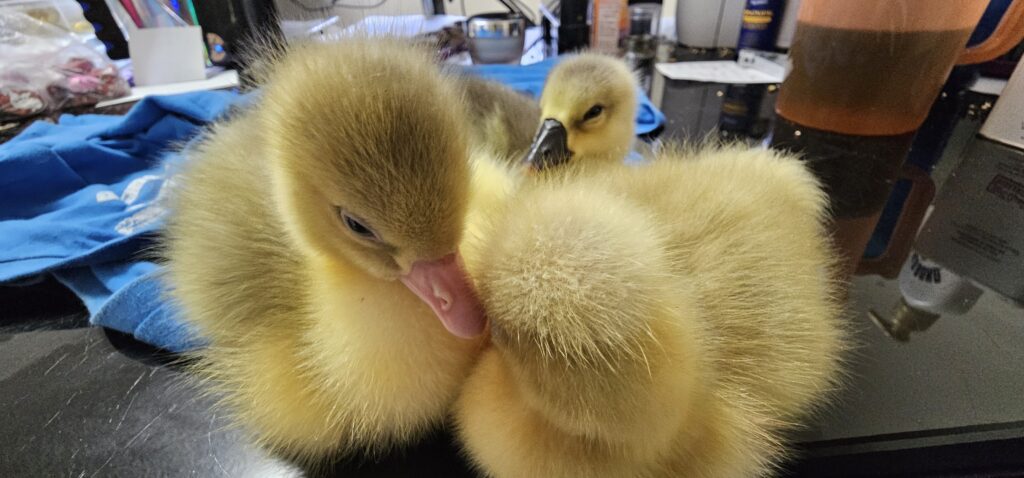
Please note: heat lamps are a serious fire risk
If you use a heat lamp, make sure to not place it any closer than 18 inches, from the bedding, walls, or any other structures, in the brooder. Many people worry about whether their babies are warm enough. The best way to judge the bird’s comfort is to watch them. If they are all huddled under the heater, they need more heat. All bedded down, away from the heater, the heat is too high. If they are breathing with their mouths open, (panting) it’s too warm. Comfortable birds should be spread throughout the brooder, with some eating, some drinking, others sleeping.
Goslings can be successfully brooded by broody chicken hens. Place them under your broody hen at night. Provide the hen and her brood with a dry comfortable shelter. Keep in mind that geese are not always welcoming of babies, especially young one, to babies they do not know. They can even kill the gosling, if they do not want to care for it, unless you are sure that your goose will accept the babies.
| Age | Approximate brooder temperature |
|---|---|
| Week 1 | 90°F |
| Week 2 | 80°F |
| Week 3 | 75°F |
| Week 4 | 70°F |
| Week 5+ | About 70°F or heat as needed |
Always give them enough room to move away from the heat source if they become too warm. Heat lamps should be securely fastened because they can pose a serious fire hazard around bedding.🪹 Bedding
Best Bedding for Goslings
Goslings are extremely messy, especially around their water. Their sleeping area should remain clean and dry because constantly wet bedding encourages foot, skin, and respiratory problems.
Pine or aspen shavings can be used, as can other absorbent bedding materials. Avoid cedar shavings. The floor should also provide good traction; slippery flooring can contribute to leg injuries. Wire flooring is inappropriate for young waterfowl because their feet and hocks may become caught or injured.
Expect to remove wet bedding frequently—sometimes several times per day. Use appropriate bedding. Paper towels are great for the first few days, while they are learning to eat. After the first few days, you can switch to something like pine shavings.
I personally use towels that i buy at the thrift store and wash them as needed for the first 2 weeks. Make sure to replace soiled and damp bedding regularly. Don’t brood on newspaper, as the slippery surface does not give them any grip, and can lead to them developing splayed legs. Gosling living spaces should have clean, dry bedding, at all times with fresh water.
Aspen wood shavings or straw are less ideal, but still an option. Straw bedding can increase the risk of aspergillosis, so some bird caregivers choose to avoid it entirely. Additionally, because straw is not overly absorbent, its use could increase the gosling’s risk of bumble foot. Cedar should never be used in avian living spaces, as it can cause severe respiratory issues when wet. Goslings will nibble at anything, so make sure that there is nothing dangerous they can nibble on. Hemp bedding, is my favorite type of bedding. It’s non dusty and it soak up water and humidity very well, but it a little more expensive in general than other bedding type.
What Goslings Should Eat
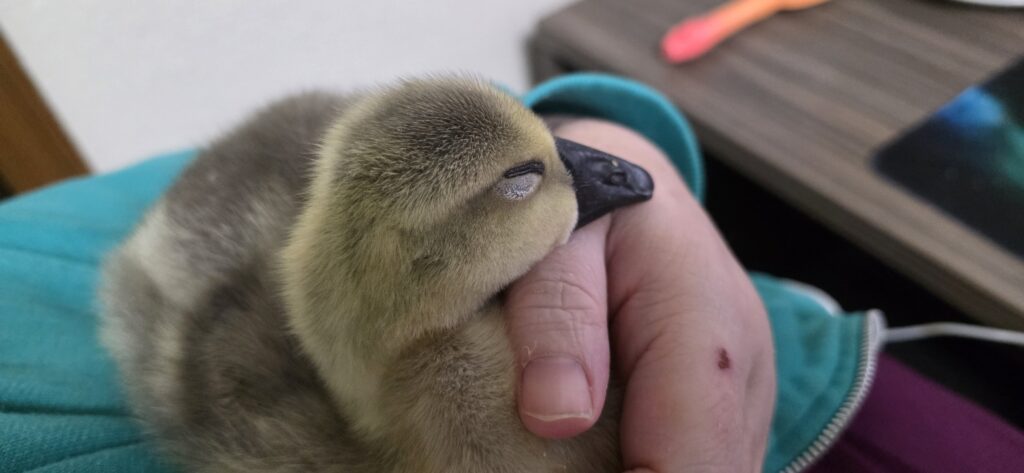
A commercial waterfowl starter crumble is the easiest way to provide balanced nutrition. A starter containing approximately 20–22% protein is commonly recommended during the first few weeks. Waterfowl-specific feed is preferable because it is formulated for their nutritional needs. At roughly 3 weeks, goslings can gradually transition to a grower ration containing approximately 17–20% protein.
Avoid feeding layer pellets to goslings. Layer diets contain calcium levels intended for egg-laying birds and are inappropriate for growing youngsters. What to feed your gosling if you don’t have gosling food on hand. You can provide a diet recommended by wildlife rehabilitators, by mixing 2 ounces of human baby mixed grain cereal, with 2.5 ounces of each of the following: baby food puree, water, and Pedialyte, or in an emergency situation, non medicated chick starter feed BUT you need to add extra niacin and vitamins. This is only as an emergency as chick feed does not possess the right nutrient a waterfowl need.
Young goslings grow extremely fast and need good nutrition from the beginning. Feed them a waterfowl starter crumble free-choice, meaning they should have access to it whenever they want to eat.
One nutrient that is particularly important is niacin (vitamin B3). Goslings have higher niacin requirements than chickens, and deficiency can contribute to weak or bowed legs and enlarged hock joints. A properly formulated waterfowl starter should contain adequate niacin.
If you are using chicken chick starter because waterfowl feed isn’t available, check the formulation carefully; chicken diets may not provide the vitamin and mineral concentrations growing waterfowl require. Goslings need more niacin, than many commercial starter feeds provide. Be on the lookout for niacin deficiency: Weak or bowed legs, stunted growth, and enlarged hocks are all a sign of niacin deficiency. To prevent this, add niacin to drinking water at 100-150 mg per gallon from 0-10 weeks of age. Be aware that most plant-based niacin is not available for waterfowl to metabolize. Once your young waterfowl are able to forage and eat insects, they will usually get enough niacin.
You want to provide grit, when the birds begin to eat anything, unless they go outside. Their crops use grit to digest food.
Make arrangements to provide grass, starting as early as the first week. When the weather is mild, goslings can be let out and allowed to graze when only a few days old. Grass is natural food # 1, for geese. Great savings in feed can be made by providing good pasture, throughout the growing period. Bluegrass, orchard grass, timothy and bromegrass have been used successfully. Grains like barley, wheat and rye make excellent early or fall pastures. Goslings or geese will love clover, lespedeza or alfalfa.
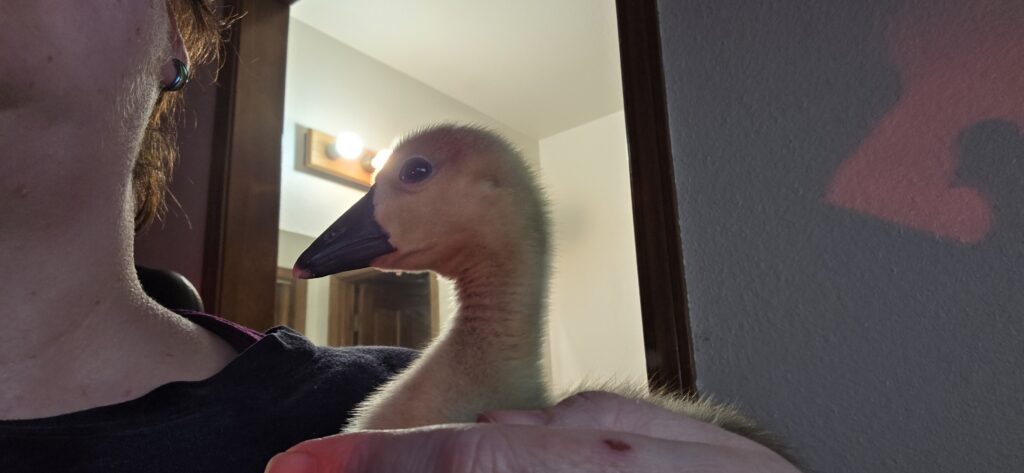
Gradually wean them off the waterfowl starter feed. You can replace this with pellets. Check with your animal food supplier, to make sure you are giving them the correct ones. You can also add wheat and corn slowly. Mazuri feed seems to be the food of choice for waterfowls.
Plenty of drinking water should be available at all times. The key with waterfowl is making sure they always have access to water. Geese have trouble swallowing without water: Their nostrils can become plugged with feed, if they can’t rinse them, while feeding. Goose-specific nutrient recommendations list about 20% protein for young goslings and 15% for growing and breeding geese, while commercial feeding programs vary somewhat by formulation. The most important thing is to use a feed specifically formulated for waterfowl whenever possible.
| Age/Stage | Recommended feed | Approx. protein |
|---|---|---|
| Goslings, 0–3/4 weeks | Waterfowl starter crumble | 20–22% |
| Growing goslings | Waterfowl grower pellets | 15–18% |
| Adult maintenance | Waterfowl maintenance pellets | 14–17% |
| Laying females | Goose/waterfowl breeder or layer ration | About 15–17%, with increased calcium |
Gosling is starting to develop angel wing
Keep the gosling on a complete, age-appropriate waterfowl diet, greatly limit calorie-dense treats, provide room to walk and exercise, and arrange veterinary advice as soon as possible. Early treatment has a much better chance of working than waiting several weeks.
If the goose is already an adult and the wing has been twisted for a long time, attempting to force it straight generally won’t correct the underlying deformity. Domestic geese can often live comfortably with permanent angel wing, although the protruding wing should be checked periodically for rubbing, wounds, or damaged feathers.
While the gosling is young and the bones and joints are still developing, correcting the diet and properly supporting the wing can sometimes allow it to return to a normal position. Once the wing bones have hardened in the abnormal position, however, the deformity is usually permanent.
Wing wrapping or splinting is commonly used in young birds, but I would not tightly wrap a gosling’s wing without being shown how. An incorrectly placed bandage can restrict circulation, breathing, or normal development.
Water for Goslings
You will need to design your waterer in such a way that the babies cannot get into the water and become soaked, which can lead to chilling and sickness. However, they will need enough water to dip their bill under, to clean their nares. Another option is putting a scrap piece of 2×4 lumber under the waterer, so they can drink, but not actually get into the water. Make sure the elevated water is steady enough, to keep them from knocking it over. Goslings consume enormous quantities of feed and water, due to rapid growth.
Goslings should have fresh drinking water available whenever they have food. They use water not only to drink but also to swallow food and clean their bills and nostrils. Their drinking container should therefore be deep enough for them to immerse their bill.
However, the waterer should be designed so that they cannot climb completely inside it. Goslings will turn an ordinary water bowl into a miniature swimming pool remarkably quickly. An elevated water station with a tray underneath can help contain splashing and keep bedding dry. Geese need fresh drinking water every day, even during freezing weather.
Ideally, the container should be deep enough for them to submerge their entire bill and clean their nostrils and eyes. They do not necessarily need a swimming pool during severe winter weather.
Heated livestock buckets or heated poultry waterers can make winter care much easier. Make sure electrical cords are protected so the geese cannot chew or damage them. Change dirty water regularly because geese will quickly turn clean water into muddy water.
Geese grazing naturally often pick up small stones and grit on their own. If they are confined or regularly eating grains, vegetables or other foods besides commercial pellets, provide insoluble poultry grit so their gizzard can properly grind the food.
Gosling Introduction to Swimming
Goslings do not need a pond or swimming pool to grow normally.
Young goslings also are not yet fully waterproof. Their down can become saturated, causing them to become chilled or exhausted. If you allow a young gosling to swim, use shallow, lukewarm water, supervise constantly, make sure it can climb out easily, and dry and warm it afterward if necessary. Never leave a young gosling unattended in swimming water.
Once their adult feathers have developed, usually around 6–9 weeks depending on the bird, they become much better equipped for normal outdoor water activities.
When Can Goslings Go Outside
Short supervised trips outside can begin relatively early during warm, dry weather. Young goslings should be protected from cold rain and wet grass because they can chill rapidly.
Once fully feathered, goslings can generally live outdoors provided they have a secure shelter, dry sleeping area, protection from severe weather, and strong predator-proof fencing. Metzer Farms places full feathering at approximately 7–9 weeks. Cold climates may require keeping young birds protected for longer.
If the weather is warm and calm, you can begin taking healthy goslings out, for supervised outdoor time. They should not be left unattended, or remain out for long periods of time, until they are at least 6 weeks old. Additionally, even after they are old enough to spend time outside, without constant supervision, be aware that they may need to be encouraged back, into their indoor living space, during inclement weather. Geese are like toddlers that often do not want to go to bed.
How to Socialize Goslings
Geese are highly social flock animals. Ideally, a gosling should have another gosling or compatible goose companion rather than being raised completely alone. A human can become very important to a hand-raised gosling, but human companionship cannot completely replace the social behavior another goose provides.
Spending calm time around your goslings, talking softly, offering food by hand, and gently handling them while young can also make adult geese considerably easier to handle.
Goslings are social and should be raised with other goslings when possible. If you rescue a group of goslings, you can typically quarantine them as a group, separating them only, if individuals aren’t getting along, or if a gosling has health issues. Goslings learn important skills from their mother and should not be separated, unless absolutely necessary.
During introductions, you should watch for any signs of older geese “picking on” or biting the goslings, and intervene immediately.
Predator Protection for Goslings
Young goslings are vulnerable to dogs, cats, foxes, coyotes, raccoons, birds of prey, and other predators. Even when goslings become large, they are not automatically predator-proof.
Outdoor housing should have strong fencing and a secure nighttime enclosure. Do not rely on chicken wire alone where determined predators are present.
Goslings illnesses What to look for
Goslings can be particularly susceptible to certain illnesses and diseases. When caring for goslings, it’s important to be familiar with some of the more common health challenges they face, so you can watch closely for signs of these issues, in your gaggle. Goslings should be monitored closely for any signs of illness including lethargy, decreased appetite, diarrhea, labored breathing, panting, and sinus flaring. If a gosling appears to be separating themselves from the flock, this could be a sign of illness or a sign that they are getting picked on. Always separate them and care for them in a separate enclosure, until they get better.
Pay close attention to their mobility. Healthy goslings should walk and run, without any sign of lameness. If they get picked on, separate them immediately. Place the single gosling with another young companion like a duckling, or chicks.
Vent Pasting
Geese can develop a condition, which is commonly called “pasty butt”, where feces stick to their vent, clogging it and making it impossible for them to defecate. Left untreated, this is fatal. While certain diseases can cause diarrhea, leading to vent pasting, other times stress or even temperature changes can lead to vent pasting as well. “Pasty butt” is a symptom, not a diagnosis, and in cases where this is a concern, a veterinarian should be consulted to diagnose and treat the underlying cause. During the first two weeks of life, you should check a gosling’s vent at least once daily, gently cleaning as needed. Be aware that goslings can chill easily, and they do not have their waterproof feathers, until they are older, so clean their vent without getting them overly wet. A dampened cotton swab can usually do the trick.
Wry Neck
Wry neck, an unnatural twisting of the neck, can be a result of trauma, toxins, a vitamin deficiency, especially thiamine, or an issue during incubation. This twisting can range from minor to severe. If one of your gosling residents is showing signs of a wry neck, be sure to consult with your veterinarian immediately, to determine the cause and best treatment options. In some cases vitamin supplementation may be necessary. In severe cases, individuals may have difficulty walking, eating, and drinking. Be sure to provide supportive care as necessary to ensure they are able to get the nutrients they need and make sure their current living arrangement is safe for them.
Goose Parvovirus
Goose parvovirus (GPV) is a highly contagious viral disease of geese, especially young goslings. It is also called Derzsy’s disease, goose hepatitis, or goose plague. The greatest danger is to goslings under about 4 weeks old; mortality in very young susceptible goslings can reach 70–100%.
Symptoms
Signs vary considerably with the gosling’s age:
| Age | Typical signs |
|---|---|
| Under 1 week | Sudden loss of appetite, weakness and rapid death, sometimes within 2–5 days |
| 2–4 weeks | Watery or white diarrhea, weakness, nasal or eye discharge, swollen/red eyelids, poor appetite |
| Survivors | Severe stunting, poor feather growth or feather loss, reddened skin and failure to thrive |
| Older geese | Often few or no obvious symptoms; some may become carriers |
How it spreads
The virus can pass from an infected breeding goose through the egg to the gosling. Infected birds also shed large amounts of virus in their feces, allowing it to spread between birds and through contaminated housing, equipment, footwear, water and other materials. Older geese with no obvious illness may potentially carry and shed the virus.
It is a waterfowl virus and is distinct from the parvoviruses that affect dogs and other mammals.
Treatment
There is no specific antiviral treatment known to cure goose parvovirus.
Supportive veterinary care may still be important for surviving goslings, particularly maintaining appropriate warmth, hydration and nutrition and addressing secondary infections when present. Antibiotics do not kill the parvovirus itself.
What to do if you suspect it
- Immediately isolate sick goslings from healthy birds.
- Avoid moving birds, eggs, bedding or equipment between groups.
- Use separate footwear, feeders and water containers for affected birds.
- Clean organic material thoroughly before disinfecting, and use a disinfectant specifically labeled as effective against parvoviruses.
- Contact an avian/poultry veterinarian or veterinary diagnostic laboratory promptly, especially if several young goslings become sick or die suddenly.
- If a gosling dies, refrigerating the body rather than freezing it may allow a veterinarian to submit it for necropsy and diagnostic testing; follow the laboratory’s instructions.
What a Healthy Gosling Looks Like
A healthy gosling should be bright, alert, interested in eating and drinking, walking normally, breathing quietly, and steadily gaining size.
Seek veterinary help promptly if you notice:
- inability to stand or sudden leg weakness
- twisted, swollen, or collapsing legs
- refusal to eat or drink
- extreme sleepiness or weakness
- repeated falling or loss of balance
- swollen or crusted eyes
- nasal discharge
- wheezing, rattling, or open-mouth breathing
- persistent diarrhea or blood in the droppings
- a swollen abdomen
- seizures or severe neurological symptoms
Abnormal breathing, nasal discharge, or significant changes in the eyes warrant veterinary evaluation rather than simply treating at home.
Foods to limit or avoid for Goslings
Bread is not appropriate as a major food. Diets dominated by bread, corn or lettuce can result in deficiencies because they don’t provide enough protein, vitamins and minerals.
Also avoid moldy food, spoiled feed, heavily salted foods, candy, chocolate, alcohol, avocado, and highly processed human foods.
For hours of entertainment, you may want to provide your birds with swimming water. Goslings can be introduced to swimming water, as early as two weeks of age, but you need to be very careful when doing so. They must be able to walk in and out of the water very easily. The water should not be too cold, and they have to be able to find their heated area, for warming up. As they have no oil on their feathers at this age, they cannot be in the water for long periods, or they will become waterlogged, and even drown.
The Most Important Things to Remember
For the first several weeks, focus on a warm but not overheated brooder, non-slip dry bedding, unlimited clean drinking water, a balanced waterfowl starter, adequate space, companionship, and protection from predators. Goslings grow astonishingly quickly, so expect to enlarge their enclosure and water setup frequently.
With proper nutrition and plenty of safe outdoor grazing as they mature, goslings usually transition very quickly from tiny fluffy babies into surprisingly large young geese.
Once you think they can defend themselves against rats and no longer need the heat, they can go into their adult coop. I make sure that my geese have shelter from the sun, during the day, and from the rain, at least until they have their adult feathers.