Complete Duck Care Guide for Pet Ducks
Before Getting Pet Ducks
Caring for ducks can be incredibly rewarding, but ducks require much more than food, water and a backyard.
I have raised and cared for ducks for years, and one of the biggest things I have learned is that every duck has its own personality, habits and needs. Ducks are highly social animals that need companionship, appropriate food, clean water, secure housing and daily attention.
This guide covers the basics of keeping pet ducks healthy and safe, from raising ducklings and choosing the right food to preparing for winter and recognizing when something may be wrong.
Is a Pet Duck Right for You?
If you are thinking about getting ducks, I strongly recommend learning about their needs before bringing ducklings home. Domestic ducks can live for many years, so getting one should be viewed as a long-term commitment.
I cannot stress this enough. They require much more time, space, cleaning, proper housing, companionship, and daily care than we think. That tiny, fluffy duckling will grow into an adult duck very quickly, less than a month—and depending on the breed and circumstances, you could be making a commitment that lasts many years. Are you truly ready for that ?
So before you bring home that adorable little duckling, please take the time to read the information below and ask yourself: They can be wonderful, entertaining, and lovable animals—but they also require much more care, space, cleaning, and dedication than many people realize.
How Many Ducks Should You Keep?
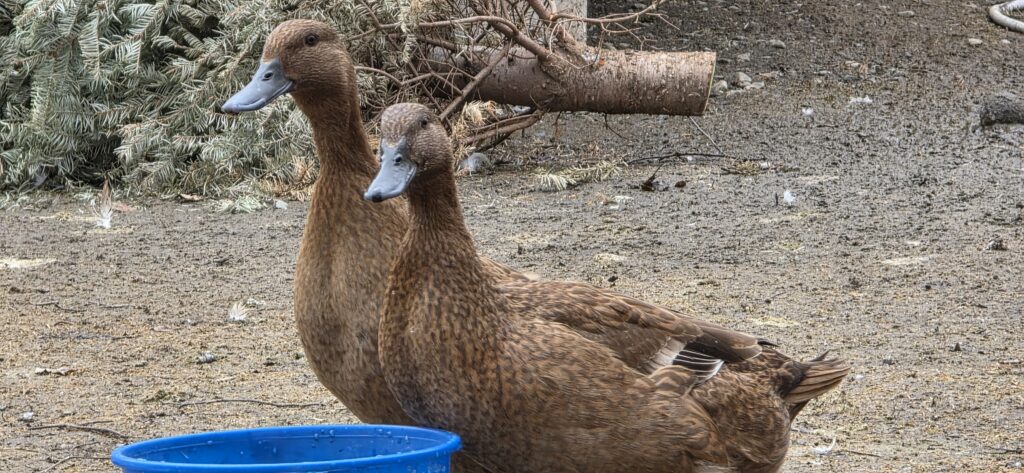
One of the most important things to understand is that ducks are flock animals. A human can become a wonderful friend to a duck, but humans cannot completely replace another duck.
Whenever possible, keep at least two compatible ducks. A small flock of three or more can be even better because the birds are not entirely dependent upon one companion if a loss should occur.
Ducks also require care 365 days a year. Someone must provide food and water, clean their enclosure, check their health, lock them safely inside at night, and care for them during vacations, bad weather, illness, and emergencies. Before bringing ducks home, also check your local regulations regarding poultry, enclosures, noise, property setbacks, and the number of birds permitted.
Do you have an avian veterinarian where you live ? Ducks being birds, can mainly be seen by a specialized vet to get the proper care they would need.
Buying is the easy part
Caring for it properly is the real commitment. A duck will depend on you for clean water, nutritious food, safe housing, protection from predators, companionship, veterinary care when needed, and a clean environment every single day. So before you fall in love with that adorable little duckling and bring it home, please take a few minutes to read through this guide.
Do I have the time, space, money, patience, and commitment to care for a duck ?
If the answer is yes, ducks can be incredibly entertaining, affectionate, beautiful animals to have in your life. But first, make sure you know exactly what you’re getting into.
How long do ducks live ?
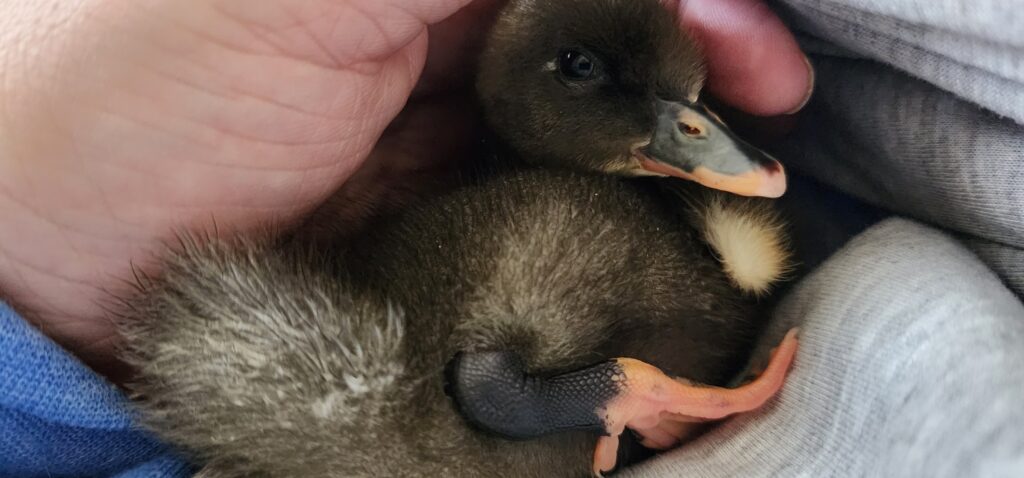
Domestic ducks can live 8 to 15 years or longer with proper care—in many cases, as long as a dog. Bringing home a duck is therefore a long-term commitment, not something to take lightly.
Ducks are also highly social animals that naturally live with other ducks. They can become anxious, stressed, or lonely when kept by themselves, which is why I strongly recommend never getting just one duck. Even if you raise two or more ducklings together, don’t worry—they can still become very attached to you and recognize you as part of their flock.
If you feel ready to bring a duckling home, read my duckling care guide.
Read my complete Duckling Care Guide
Duck Feeding & Nutrition Guide
The Duck House
A safe duck house should do more than keep ducks contained. It should protect them from predators, bad weather, excessive moisture, drafts, injuries, and extreme temperatures while giving them enough room to move, rest, and behave naturally.
The nighttime house does not need to be fancy, but it should be completely predator-proof, waterproof, well ventilated, and free from drafts at duck level. Ducks sleep on the ground rather than roosting like chickens, so they need plenty of clean floor space and soft, dry bedding.
Allow around 4 square feet of indoor nighttime space per adult duck, and provide more whenever possible. Recommendations vary according to breed, climate, flock size, and how much time the ducks spend inside.
Ventilation is extremely important. Ducks produce a surprising amount of moisture from their breathing, droppings, and water. The shelter should have vents located above the ducks, allowing moist air and ammonia to escape without creating a cold draft directly across them. If you notice condensation on the walls or ceiling, the enclosure needs more ventilation.
Predator Protection
This is probably the most important part of a duck enclosure.
Predator protection is one of the most important parts of duck housing. Domestic ducks are especially vulnerable at night and should be locked inside a fully enclosed, predator-resistant shelter from dusk until morning.

Doors should fit tightly, with no large gaps underneath or around them, and latches should require more than simply pushing or lifting them open. If predators can dig in your area, protect the bottom of the run with buried fencing or an outward-facing hardware-cloth apron. A fully covered run also offers protection from climbing predators and birds of prey.
For safer housing:
- Cover openings with ¼- to ½-inch galvanized hardware cloth, rather than ordinary chicken wire.
- Cover windows, vents, and other openings as well as walls.
- Make sure there are no gaps beneath or around doors.
- Use strong latches that raccoons cannot easily manipulate.
- Provide a solid, secure roof.
- Protect the bottom of outdoor enclosures from predators that dig underneath fencing.
- A fully enclosed run provides additional protection from hawks, owls, climbing predators, and jumping predators.
Chicken wire is useful for keeping poultry inside, but it should not be relied upon as the main defense against predators.
- Raccoons
- Skunks
- Coyotes
- Red Foxes
- Badgers
- Mink
- Hawks
- Owls
- Snapping turtle
- Feral Cats
- Weasels
- Bobcats, Lynx
- Stray Dogs
Is just a small list of predators that can take your feathered friend.
Outdoor Run
Give ducks as much outdoor space as you reasonably can. If they spend most of the day confined to their run, around 10 square feet or more per duck is a useful minimum starting point, with considerably more space being preferable. Ducks love walking, exploring, digging through mud, searching for insects, grazing, bathing, and resting in the sun.
Include both sunny and shaded areas, and give them somewhere dry to rest. Grass is wonderful, although a small enclosure full of ducks can turn beautiful grass into mud surprisingly quickly!
The best, safest way to keep your ducks safe, is to have a high, solid fence, to keep predators out. Electrify that fence, put in some dig guard to keep digging animals away, inside and outside, at the bottom of your fence. You will need to keep those digging, climbing, jumping predators out of your duck enclosure. For the night time shelter, a solid cement foundation under a shed, is one of the best options. A lot of predators will just chew through your wood floor, dig under your shelter, find any way possible to get into that shelter at night. Bears are really strong and can tear a wood shed.
When I lived in Sitka, Alaska, a brown bear (Grizzly bear) ripped wooden slats on the shed where we were keeping our ducks. He got spooked and ran away when we went out there and if we hadn’t gone out when we heard the noise, he would have torn the door apart and taken my ducks. He was attracted to the food, water and poop smell of my ducks in the shed. Most predators will go for the eggs, the food, water, but if your ducks get in the way, they will kill the duck first. Weasels can get into any tiny holes about the size of a quarter and kill a duck with ease.
Snapping turtles can maim your duck in your pond or lake, you should never leave your ducks on a large pond or lake, unless you are sure that there are no snapping turtles, or anything that could get them. There are so many predators that will kill a defenseless duck. I know plenty of people who never lost a duck and have very nice, safe enclosures. As you can see, owning a duck can be very expensive. You also have to worry about predators from the sky. A net is a good safety measure to avoid your pets being attacked.

Water Area
Ducks need constant access to clean drinking water deep enough to completely submerge their bills and clean their nostrils and eyes. They also greatly benefit from water in which they can bathe and swim.
A kiddie pool, livestock tub, or small pond can work well. Make sure ducks can easily climb in and out; steep-sided or deep containers without an exit can be dangerous.
Whenever possible, keep swimming water outside the nighttime house. Ducks splash enormous amounts of water, and keeping their pool outdoors helps prevent excessively wet bedding, humidity, ammonia, and mold inside their shelter.
Flooring and Bedding
The flooring should be solid and non-slip—never wire flooring. Good bedding choices for adult ducks can include appropriate wood shavings or chopped bedding materials that remain absorbent and relatively dry.
The most important thing is keeping the enclosure clean. Ducks produce wet droppings and will quickly soak bedding around their water. Remove wet bedding frequently and replace it with dry material. Damp housing can contribute to foot and respiratory problems.
Cold Weather Duck Housing
For very cold and snowy climates, don’t make the mistake of sealing the duck house tightly to keep it warm. Ducks generally tolerate cold surprisingly well when they are dry and protected from strong drafts, whereas a sealed, humid shelter can create respiratory problems. Keep ventilation openings high above the birds while preventing direct wind from blowing across the sleeping area.
A covered portion of the outdoor run is also very useful during winter. It keeps snow and freezing rain off part of the ground and gives the ducks somewhere dry to walk. During severe cold, freezing rain, or dangerous wind chill, they may need to remain inside their protected shelter.
A good rule to remember: dry bedding, fresh air without drafts, plenty of room, clean water, and serious predator protection. A beautiful duck house is nice, but a safe, clean, spacious enclosure is far more important to your ducks.
Summer Duck Care
Heat can be harder on poultry than cold.
Provide shade, abundant cool drinking water, airflow, and opportunities to cool their feet and bills.
Watch for heat stress such as persistent panting, wings held away from the body, lethargy, weakness, or reduced eating. Poultry can begin experiencing heat stress as temperatures climb into the 80s and 90s, although tolerance varies considerably between birds and breeds.
Do adult duck need a bath ?
Yes ! Once your duck is moved outside, it is important to have a small pool or a container big enough for them to be able to wash themselves. I read somewhere that it is not important or necessary to do that, but it is ! Your pet duck will love it! Ducks spend a good amount of time in the water, they are very clean animals. It also helps them keep their feathers in top shape. That is very important for a duck. It distributes the oil a lot easier for them after a bath.
Preening after a swim, will ensure that your duck will be fully “waterproof” That means that, when it rains heavily, snow, or it’s very cold, your duck will be completely dry and the water will just bead on their back. This helps regulate their temperature. It keeps them warm. A cold duck is at risk of upper respiratory infection and that’s a nasty disease to get rid of and highly contagious to other birds.
Some ducks do not wash properly, use their glands or have other issues and well, it is a good idea to give them a bath inside and use Dawn dish soap on them once in a while to make sure that they are waterproof. Jumbo Pekin ducks, for example, have an extremely hard time getting into a pool because they have short legs and are very heavy. Some are even scared to climb small steps and get into a pool. So you will usually see them wash in their bucket of water but that is not enough to get a proper bath. Jumbo Pekin ducks, just like other ducks, appreciate being waterproof and having nice, clean feathers.
Bonding with your duck
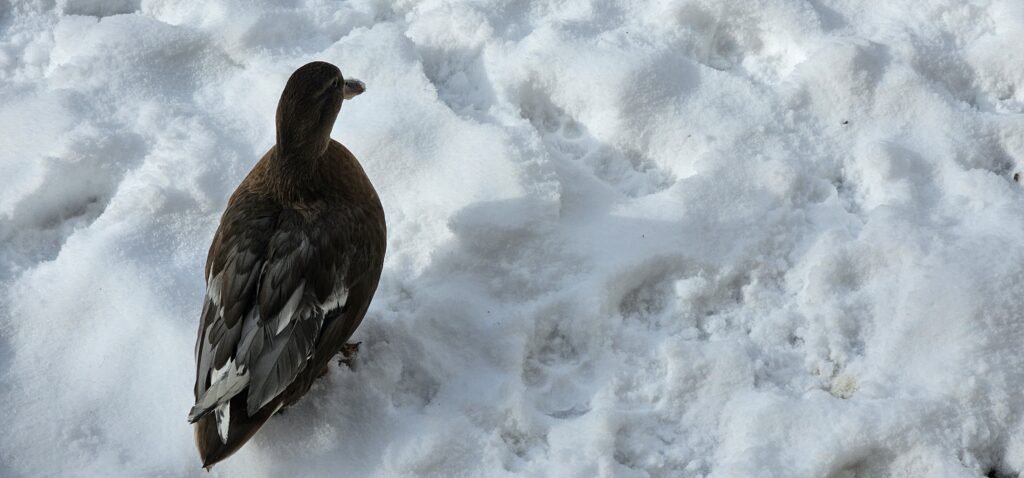
A lot of people, after they are full grown, put their duck outside and dislike how unfriendly their ducks become. Well… I would be wild too if my caretaker put me outside and never visited me or spent time with me!
When you move them to their outside enclosure, it is important to keep visiting them several times a day, talk to them, pet them and spend time with them. It is constant work with most birds. I make sure to visit mine every single day and offer them treats. They will eventually eat from your hand and get used to being around you.
I visit them often, give them treats, talk to them etc. If you work and don’t have this much time for your duck, don’t expect your animal to be tame. It’s just how birds are. A dog or cat may be better for your lifestyle. If your ducks are not tame and it is not a problem, and you just enjoy watching their funny antics, then you should absolutely get ducks! Because, yes, ducks can be really funny 🙂
They are pretty smart, funny, and very cute animals. Once you get to see them grow up, watch them being ducks, it’s an amazing feeling ! I find it peaceful, relaxing, to just sit outside and watch them.
Broody Hen
Ducks become broody when their hormones tell them it is time to sit on their eggs. They can also become broody if they are bored. If you want your birds to hatch and raise their own, this is good news. If you want them to continue laying, this is not good news as once a duck becomes broody, they stop laying eggs.
How do you know if your bird is broody? She spends much more time on the nest and refuses to leave, if you try to remove her. She may put more of her feathers in the nest or she tucks her head lower in her chest when she is off the nest and lets out a very loud “Quack” letting everyone know she is broody and does not want to mate.
How to Break Up a Broody Bird
1- The best way is to buy dummy eggs *Fake eggs* and replace those in the nest with the dummy eggs. When she sees that the eggs won’t hatch, she should eventually stop sitting on them.
2- If that does not work, take one egg out at time every day until there is none left and this should make your hen sit less and less and just give up sitting.
3- You can take out all the eggs and see if your hen is not too upset. Some will actually be relieved to not have to sit anymore and will just go on with their routine.
4- If you don’t have dummy eggs, I suggest using chicken eggs and just swap them with the duck eggs. Yes it works 🙂 they won’t hatch and produce ducklings.
If you don’t want duckling and prevent broodiness, make sure to check your duck night time shelter for any eggs she might have laid. They will lay a clutch really quick and eventually, when there is enough, will start sitting on them. Some breeds are more susceptible to broodiness than others. In reality though, any bird can become broody. You need to be vigilant when dealing with broody females if egg generation is important to you. Broody ducks mean less egg production and possible ducklings on the way!