I met my ex boyfriend when I lived in Granby. He lived in Montreal. He’s always been a big city guy, while I prefer the peaceful setting of the country life. I was still going to high school, he was working and living with his dad and sister, in an apartment. It was exciting for me to go visit him on the weekend. I had to take a bus from Granby to Montreal and it was always exciting when I would leave on Friday night. I could see the big city lights from far. He would pay for my bus ticket since I wasn’t working and going to school.
Montreal was impressive to me. I was always amazed to see how big it was, how tall the downtown buildings were. At night it was beautiful and so cool, to see the lights and tall buildings, in the distance as my bus was getting closer when I would leave in the late evening. I enjoyed riding the bus to go visit him, it was a nice, peaceful time for me.
Montreal is unlike almost any other city in North America. It combines French language and culture, historic architecture, lively neighborhoods, excellent food, public transportation, festivals, universities, and four very distinct seasons.
One moment you can be walking along the cobblestone streets of Old Montreal, surrounded by buildings that feel distinctly European. A short Metro ride later, you can be sitting in a café in the Plateau, walking through Mount Royal Park, shopping downtown, or exploring a residential neighborhood filled with Montreal’s characteristic brick homes and outdoor staircases.
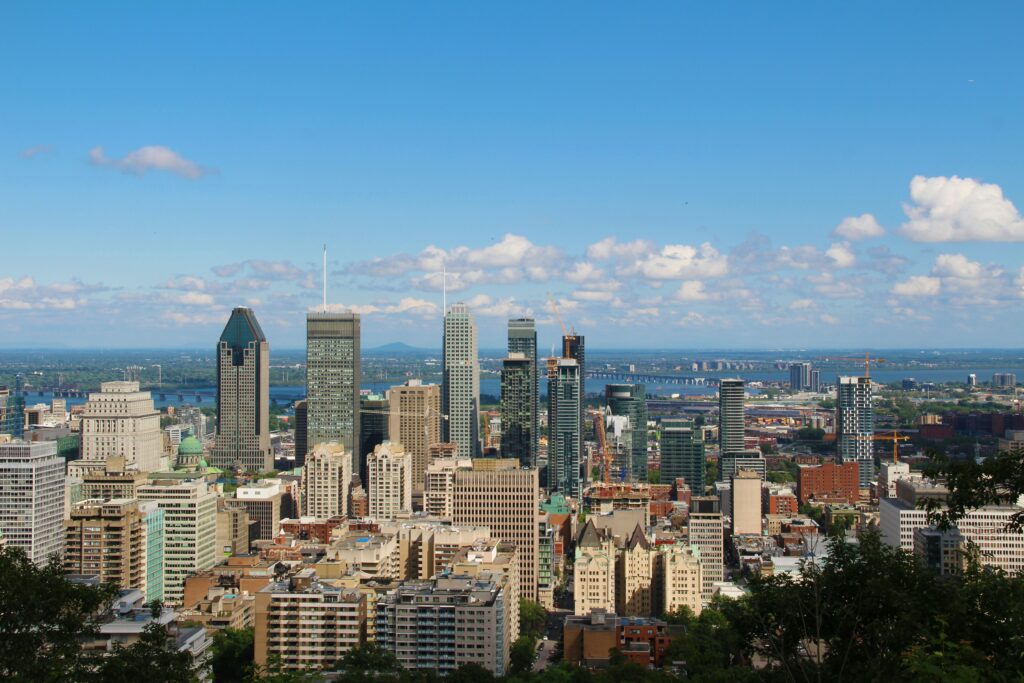
Montreal is Quebec’s largest city, located on an island in the St. Lawrence River. The city itself had a population of about 1.76 million at the 2021 Census and is divided into 19 boroughs. But visiting Montreal and living in Montreal are two very different experiences.
Life here means embracing French culture, snowy winters, warm and sometimes humid summers, public transit, neighborhood cafés, festivals, parks, food, and a city where daily life often happens on foot rather than entirely from inside a car.
Montreal is a big island, with a few million people living on it. Almost 1 million people commute everyday from all the surrounding cities. Public transport was great when I lived there. I would buy a monthly pass for 20$, and could go almost anywhere. This also included subway transit. A lot of people, like us, who didn’t have a car at the time, would rely on public transport. It was fun to go to different places almost everywhere. It’s SUPER confusing at first because the subway is so big.
It took me a while to learn which way to go, in the subway. Montreal has a lot of shops, boutiques, restaurants, parks, churches, and nightclubs. It also has a huge amusement park, on Ste-Helen island. I went to it a few times when i was younger. In high school, at the end of the year, we had a few choices, to where we would want to spend our last high school day. It was a vacation with our friends. Six Flags now owns the amusement park that was called, La Ronde.
Montreal gets a lot of tourism during the summer for good reasons. There are many things to do, places to go. Ste-Catherine street in downtown Montreal is the most popular street. Montreal also has a lot of history, if you are into that. You would love our old, beautiful churches, old Montreal where the port is and gets various boats and shipping. It’s very lively in the summer. People are very friendly and welcoming. It has a lot of diversity and people of different races, makes it very welcoming and warm. Most people speak French but there are also a lot of English speaking people.
Getting Around Montreal
One of the advantages of living in Montreal is that owning a car isn’t essential in many central neighborhoods. The Montreal Metro has four lines and 68 stations, while the city’s bus network reaches much more of the island. People commonly combine walking, buses and Metro trips.
Cycling is also deeply integrated into life in many central neighborhoods. For someone accustomed to living somewhere where almost every trip requires a car, Montreal can feel very different. You may walk to the grocery store, take the Metro downtown, meet someone at a café and walk home without ever getting behind the wheel.
Do You Need a Car in Montreal?
It depends on where you live. Someone living in the Plateau, downtown, Verdun or another transit-friendly central neighborhood may use a car relatively rarely. Life farther from the Metro can make one much more convenient.
A car can also be valuable for leaving the city and exploring the rest of Quebec. But car ownership has its own challenges in Montreal. Winter snow removal, parking restrictions, construction, traffic and finding street parking can make driving less convenient than it might be in a smaller city.
For many residents, the ideal arrangement is simply choosing a neighborhood where most daily needs are within walking or transit distance.
Food in Montreal
The city is famous for dishes such as poutine, Montreal-style bagels and smoked meat, but its food culture extends far beyond those classics.
Immigration has helped create an enormous range of restaurants and food traditions. Greek, Italian, Portuguese, Haitian, Lebanese, Vietnamese, Chinese, North African, Jewish, Caribbean and many other culinary influences are woven into everyday life. Mile End, for example, reflects generations of immigration and remains known for bakeries, cafés, independent businesses and restaurants.
Montreal is also a city where simply sitting in a neighborhood café can become part of your routine.
My favorite restaurant to go in Montreal were :
- Amir (Super good Lebanese/Mediterranean food)
- Casa Grecque (Greek Food)
- St-Hubert BBQ (They have super good BBQ chicken!)
- Schwartz’s (Best Smoked meat sandwich by far !!!)
Lifestyle
There is so much to do it’s hard to get bored.
When I lived there, we lived a very active life. We would go to nightclubs until late in the morning, eat a slice of Pizza for 2$, after dancing for hours. We would then take the bus back home, and go to sleep. I found jobs really easy there. It’s even easier if you speak French & English. What is nice is the public transport available, that makes it a lot easier for people who don’t have cars, to get to work. It’s also very friendly to cyclists. If you want to go back to school later in your life, because for some reason, you had to quit, there are so many programs available that can help you.
I have many great memories of my life when i lived there. It’s a big, busy city, but also, apparently in bigger cities, comes with it, a lot of people who are stressed, live at a fast pace. It was very different from living in my hometown in Granby. We lived in the Rosemont area, St-Michel, Montreal Nord, we moved a few times. My ex had a lot of friends, so we went out a lot with them.

If you like big cities, then Montreal totally is for you, if you are looking to relocate to Quebec. It has everything you could possibly need. It is the second most Populous city in Quebec. Montreal is one of the most bilingual cities in Quebec and Canada, with 58.5% of the population able to speak both English and French!
Life With Dogs in Montreal
Montreal can also be enjoyable for dog owners. Neighborhood parks, green spaces and walkable streets provide plenty of opportunities to get outside. Mount Royal and other large parks give residents access to more substantial natural settings without leaving the city.
But apartment living requires planning. Dog owners should consider building rules, access to outdoor space, winter conditions and proximity to veterinary care. And winter changes the routine. Salt, ice, snow and extreme cold can affect dogs just as they affect people. Paw protection, appropriate winter gear for some dogs, and careful attention during severe cold become important.
Raising a Family in Montreal
Families can find very different lifestyles depending on the neighborhood. Some boroughs offer quiet residential streets and neighborhood parks, while others put families in the middle of dense urban activity. The city itself emphasizes access to parks, schools, public transportation, shops and other everyday services across its boroughs.
Language also becomes especially important for families because Quebec has specific rules surrounding the language of education. Anyone moving to Montreal with children should research Quebec’s current school eligibility rules rather than assuming they work exactly like those in another Canadian province or in the United States.
Arts, Music and Festivals
Montreal has an unusually strong arts and cultural identity. Music, comedy, visual arts, theater, dance, film and festivals are major parts of city life. The Quartier des Spectacles downtown hosts major cultural events, while smaller venues, bars and theaters operate throughout neighborhoods such as the Plateau and Mile End.
Summer is especially busy. Public spaces that felt quiet during winter can suddenly become filled with concerts, festivals and pedestrians. For someone who enjoys arts and culture but doesn’t necessarily want to live in an enormous megacity, Montreal occupies an interesting middle ground.
Culture
Montreal remains an important Center of art, culture, literature, film and television, music, commerce, aerospace, transport, finance, pharmaceuticals, technology, design, education, tourism, food, fashion, video game development, and world affairs. It is home to the Montreal Canadiens of the National Hockey League.
Montreal Fireworks Festival is the world’s largest annual fireworks festival. The city hosts a number of festivals annually from many different countries.
Montreal also has a Casino, which I went to, that was a lot of fun ! There are so many good things about living in Montreal. If you are planning to immigrate to Quebec, Canada and want to slowly integrate yourself in French culture, and you speak English, Montreal is a great place to start. You can learn French through immersion. There are also places, where you can learn French or English, for a very low cost.
In the winter, Montreal offers a lot of various activities to do as well. I myself, never really was a winter/snow/cold person, so I never really participated in those kinds of activities, but there are a lot of people who enjoy ice skating, snow boarding etc. I think you will like our culture, our sense of humor, and our friendliness.
When I lived there, I was always able to ask for help, if I got lost or I was looking for something. We like to help people. I think that is a big benefit of living in a big city, where people immigrate, from all around the world. It makes it so much more interesting and it really helps create a fun environment for everyone.
French Is an Important Part of Life in Montreal
Anyone considering moving to Montreal should understand one thing immediately: French matters. French is the official and common language of Quebec, and the Quebec government describes it as the normal language of work, education, business, commerce and daily life. Montreal does have a substantial English-speaking community, and it is possible to hear English frequently in parts of the city.
But Montreal is not simply an English-speaking Canadian city where French happens to be common. It is part of a French-speaking society.
Knowing French makes it considerably easier to participate in everyday life, understand local culture, find certain types of employment, communicate with government services and feel connected to the wider community. Someone who arrives without much French can learn. Quebec offers French-language courses to eligible residents and people planning to settle in the province.
Learning the language can also change the experience of living in Montreal. Suddenly conversations, humor, music, television, neighborhood interactions and Quebec culture become far more accessible.
What Is Life in Montreal Really Like?
Montreal feels like a mixture of Europe and North America, but it also has an identity entirely of its own. It is a major Canadian city with skyscrapers, universities, hospitals, businesses, and busy commercial districts. At the same time, many residential neighborhoods feel surprisingly intimate.
Instead of enormous highways dividing every part of the city, you often find streets lined with apartments, duplexes and triplexes, corner stores, bakeries, cafés, neighborhood parks, and restaurants.
Montreal is also highly neighborhood-oriented. The city officially has 19 boroughs, and the experience of living in one can be quite different from living in another. That means choosing where to live in Montreal matters almost as much as choosing Montreal itself.
Montreal is often described as bilingual, but reality is more complicated. You will hear both French and English, particularly in central Montreal, universities, tourism, and some western neighborhoods. Many residents speak both languages. You will also hear numerous other languages because Montreal has long attracted immigrants from around the world.
But French remains Quebec’s official language and plays a central role in public life. For newcomers, the most practical approach is to view English as useful but French as an important part of fully living in Montreal.
Montreal’s Neighborhoods
One of the most enjoyable things about living in Montreal is exploring its neighborhoods.
Each area develops its own personality.
| Neighborhood | What It Feels Like |
|---|---|
| Downtown | Busy, urban, convenient and close to universities, shopping and entertainment |
| Old Montreal | Historic, beautiful and tourist-oriented, with cobblestone streets and old architecture |
| Plateau-Mont-Royal | Colorful, artistic, walkable and filled with cafés, restaurants and distinctive residential streets |
| Mile End | Creative and multicultural, with independent shops, cafés, bakeries and restaurants |
| Rosemont–La Petite-Patrie | Residential, neighborhood-oriented and popular with families |
| Verdun | Residential with restaurants, parks and easy access to the waterfront |
| Côte-des-Neiges–Notre-Dame-de-Grâce | Large, diverse and strongly residential |
| Outremont | Leafy residential streets and elegant architecture |
| Saint-Henri | Formerly industrial, now mixed with residential streets, restaurants and businesses |
| Villeray | Residential, walkable and known for neighborhood restaurants and parks |
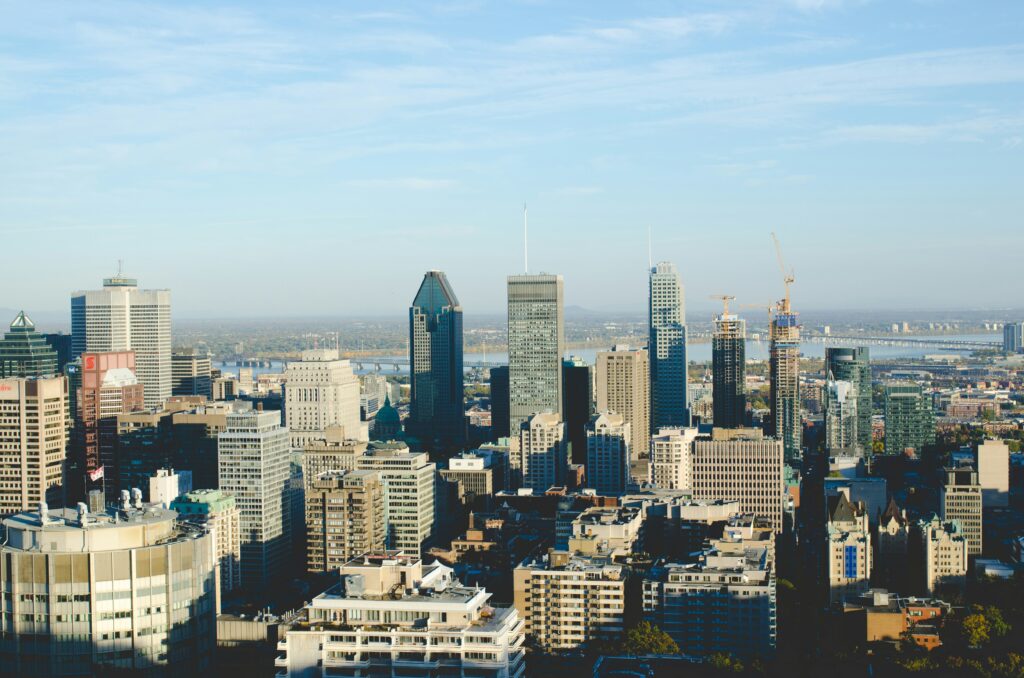
The Plateau and Mile End are particularly associated with Montreal’s artistic and creative culture. Tourisme Montréal describes the area as a mixture of colorful residential streets, cafés, restaurants, bookstores, boutiques and nightlife. Old Montreal offers an entirely different atmosphere. Its historic streets, waterfront, Notre-Dame Basilica, galleries and restaurants make it one of the city’s most recognizable districts.
Life
Overall, living in Montreal can be a unique and rich experience, with a lot of history and culture to explore. People are proud of their culture, and who they are. June 24th is a very important date and a big deal of celebration for us, like the 4th of July is, in the United States. We are loud, we love drinking, having fun, celebrating with friends, people, with music and French Quebec bands. It’s never dull to hang out with a French Canadian person 😉
Montreal is flourishing, quite safe for such a big city, and open to diversity, making it a perfect place for newcomers to thrive. This city is beautiful, and offers all the advantages of big cities. Many career opportunities are available, while the quality of life is pretty good.
You can enjoy life to the fullest, without fear of walking along the streets, and facing violence, as is the case with some other major cities. You will discover the advantages of a calm place to live. Montreal is known for its safety, for being such a big city. Of course it has bad areas that should be avoided, like any other major cities. I never felt scared when I walked alone late at night. My husband, who is a United States citizen, said the same thing when visiting.
A mix of history, modern culture and nature, Montreal is the reflection of its citizens. Safe, dynamic, innovative, welcoming, active: it has a thriving economy and an unmet quality of life, with festivals and major events, coexisting and succeeding one another, season after season.
Higher taxes
Québec has the highest sales tax, tied with the Atlantic provinces (15%). More importantly, Québec has the highest income taxes in Canada. If your income is under 50 000$ a year it won’t hit you too hard, but individuals with higher incomes will feel the pinch, paying easily 4–7% more of their income in taxes, than elsewhere in Canada. Also, Québec is the only province with its own provincial tax agency, Revenu Québec.
That means Québec residents must file two income tax forms, one for the federal government and one for the province. Residents of all other provinces file only a federal income tax form. Prices for most consumer goods vary. Beer for example is cheap, but gas prices are among the highest in Canada. Electricity in Québec is cheaper than the rest of Canada. As a consequence, most people heat with electricity.
Education
In Québec high school ends in the 11th grade. Students then typically attend college, called Cégep, for two or three years. (2 year programs for those who wish to attend university and 3 years for professional programs, like a “community college”, which lead to work). In the rest of Canada, high school extends to the 12th grade. Students can then go to community college or university.
Loi 101 the infamous “Law 101” dictates that only families, in which at least one parent was educated in English, in Canada, have the right to enroll their children in English public schools. If neither the father nor mother were educated in English in Canada, they will have to enroll their children in French schools. The only alternative is to choose an English private school, which is not particularly common, in most regions.
Life in Montreal doesn’t feel drastically different, the biggest difference being linguistic. A huge benefit to living in Montreal, is the simple fact that most people are bilingual, something that can’t be said about the rest of Canada. I feel that Montreal is at least slightly more bureaucratic, than the rest of Canada, which can rub people the wrong way.
There were stories in the past of people that could not go see their dying relatives, because of the distance, it was a many day trip. Today it is a matter of hours. We don’t measure distance in kilometers or miles, we measure in hours. Québec and Montreal are 2 hours apart.
Young people are more independent, children leave their parents sooner, you have more young and poor couples starting their life from scratch. Young people don’t save, until they start their life. In fact they jump into it, without preparation and money. Liberty being a key value.
Montreal’s Underground City
Winter also helps explain one of Montreal’s distinctive features: its interconnected underground pedestrian network. Downtown buildings, shopping centers, office towers, hotels and Metro stations are linked through underground passages.
This makes it possible to move through parts of downtown without spending your entire journey outside during the coldest weather. It doesn’t replace ordinary street life, but during a snowstorm or extremely cold day, you quickly understand why underground connections are useful.
Summer in Montreal
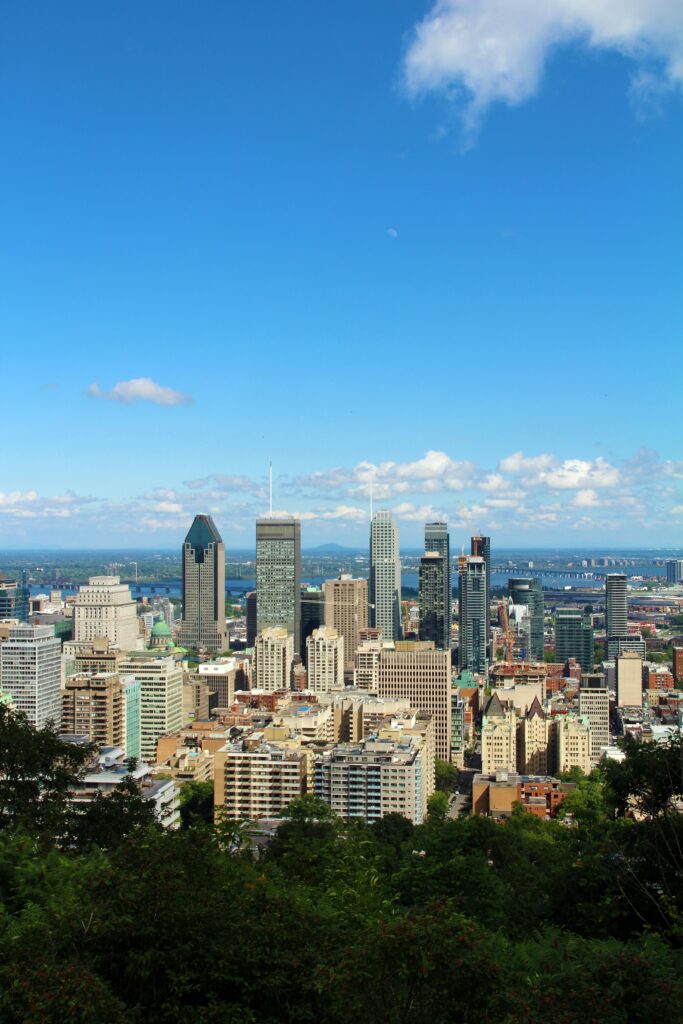
Then Montreal changes completely. The heavy winter coats disappear. Restaurant terraces fill with people. Parks become crowded. Streets close for pedestrians. Festivals appear throughout the city. July’s normal daily average at Montréal-Trudeau Airport is about 21.7°C (71°F), with an average daytime maximum around 26.7°C (80°F).
Summer can also be humid, and heat waves occasionally push temperatures considerably higher. But summer is when Montreal becomes particularly lively. People spend evenings outside, cycle through neighborhoods, picnic in parks, attend outdoor concerts and walk through pedestrianized commercial streets. The difference between January and July can almost make Montreal feel like two different cities.
Fall in Montreal
Autumn may be Montreal’s most beautiful season. Temperatures become cooler, summer humidity fades, and trees across Mount Royal and residential neighborhoods turn brilliant shades of yellow, orange and red. For photographers and anyone who loves seasonal landscapes, fall can be spectacular.
It is also fleeting. Beautiful October afternoons eventually give way to November rain, bare trees and the unmistakable feeling that another Montreal winter is approaching.
Spring in Montreal
Spring is less predictable. Snow begins melting, temperatures fluctuate, and the city goes through the messy transition between winter and warmer weather. But eventually trees bloom, parks turn green and restaurant patios begin appearing again. After a long winter, the first genuinely warm spring afternoon can feel like an event.
Mount Royal: Nature in the Middle of the City
One of Montreal’s greatest advantages is Mount Royal. The mountain rises directly beside downtown and provides a large natural area in the middle of the city. Mount Royal Park offers trails, wooded areas, viewpoints and recreational spaces. The Kondiaronk lookout provides one of Montreal’s most recognizable skyline views.
People walk, run, cycle and spend time outdoors on the mountain throughout the year. During winter, the park takes on an entirely different personality. Living near Mount Royal can make it possible to experience both dense urban life and nature within the same afternoon.
Winter in Montreal
You cannot write honestly about life in Montreal without talking about winter.
Montreal gets cold.
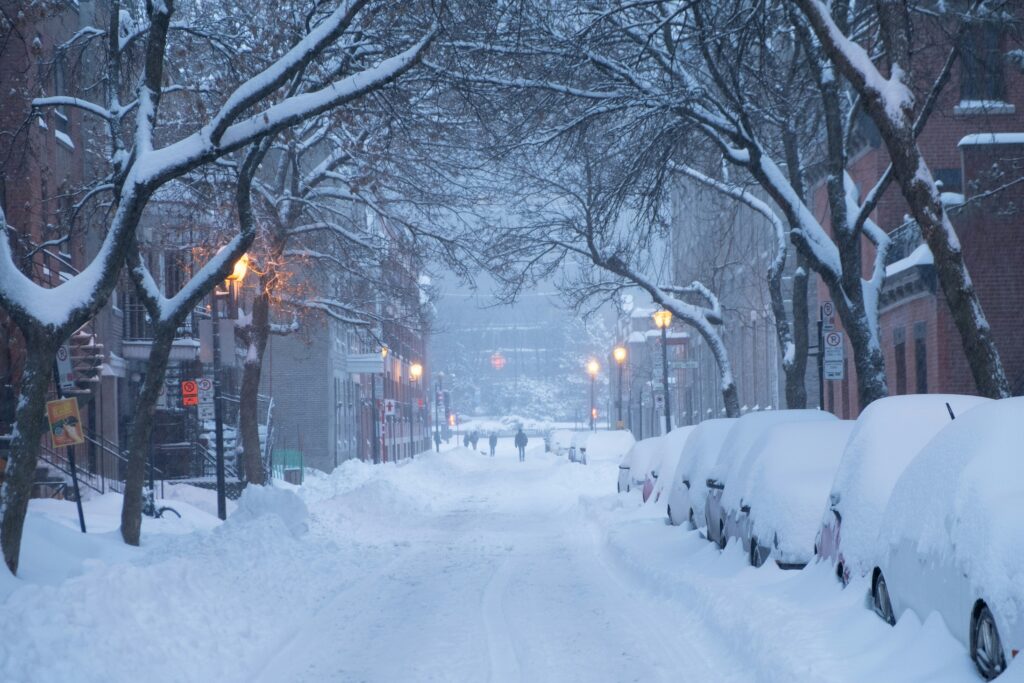
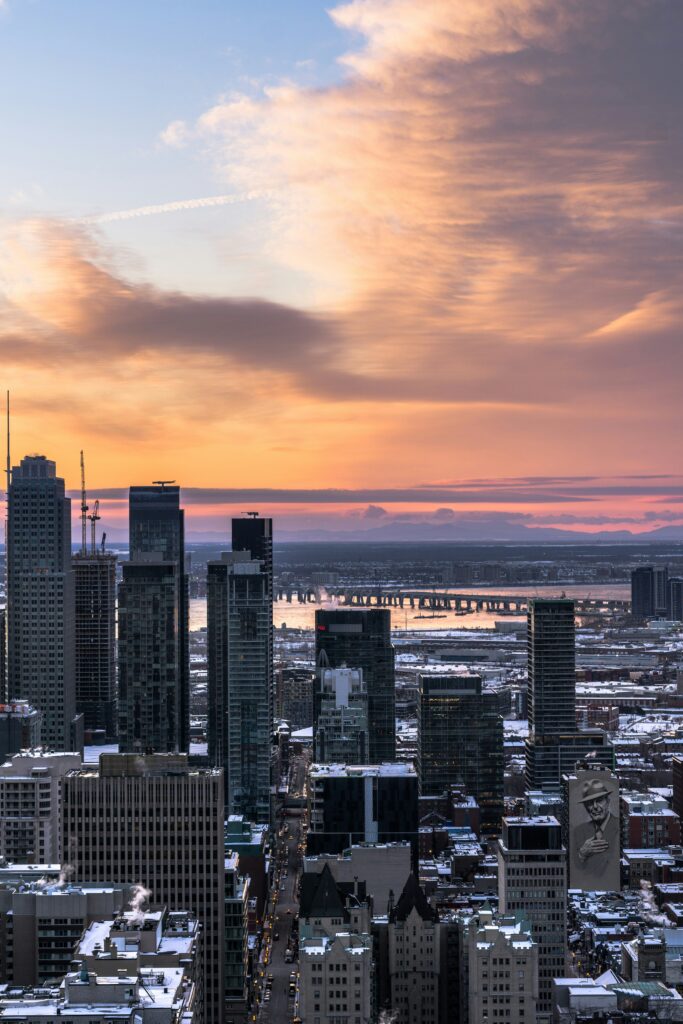
Environment and Climate Change Canada’s 1991–2020 climate normals for Montréal-Trudeau Airport show a January daily average temperature of about −9.2°C (15°F), with an average daily minimum of approximately −13.5°C (8°F).
And those are averages. Colder periods happen. Snow is part of everyday life, and winter can stretch for months. Cars become covered in snow. Sidewalks become icy. Snowplows appear regularly. Boots, gloves, scarves, warm coats and layers become necessities rather than fashion accessories. Yet Montreal doesn’t simply shut down for winter.
Climate
People continue taking the Metro, walking their dogs, going to restaurants, shopping and meeting friends. Outdoor skating, sledding, cross-country skiing and winter festivals turn the cold season into part of the city’s culture.
With the vast majority of the population living in Montreal, occupying an area with a humid continental climate, residents can enjoy four distinct seasons each year. Summer can be excessively hot at times. The winters are harsher than those accustomed to more southerly climates, but for some, they bring the scenic wonders of having the joys of snow, during the Holiday season. Metropolitan areas and the immediate suburbs are the ones that are most inconvenienced by heavy snowfalls.
A big part of our life is spent figuring out how not to freeze in the winter. House insulation, clothing, transports, etc. Your life can be reduced to something like shoveling morning, and evening, all the time. Then people discuss the best snow removal options.
People with money are the ‘flybird’, as they go to Florida, for the winter to avoid all this. I think that in Florida there are more of us than anybody else. It is caused by the harsh winter.While the weather was also listed as a pro for living in Montreal, the harshness of the winters could be daunting for some individuals.
While some enjoy wintery scenes and winter sports, others may find the cold temperatures uncomfortable. People who are older or suffer from muscle and bone ailments might find Montreal winters too harsh for their liking. During harsh winter storms, travel on the road and via air can also be interrupted. This can create slowdowns in the cities and potentially isolate more rural communities for days at a time.
Outdoor Sports
Montreal weather also allows those who enjoy outdoor activities and sports, to partake in a wide spectrum of options. Summer through mid-autumn allows for hiking, cycling and kayaking and canoeing. Mid-autumn through early-spring allows for winter sports, such as skiing, snowboarding, outdoor hockey, etc. to be enjoyed. Both urban and rural residents enjoy this variety of summer and winter activities.
Potentially Higher Heating Bills
Harsh winters require increased use of residential heating across Montreal. With the price of natural gas, being on average 63% higher than in the province of Ontario, and other parts of Canada, the use of natural gas for this type of constant and frequent heating, could be seen as cost-prohibitive.
This is why only about 14 percent of Quebec households rely on gas furnaces for heating. The remaining 86 percent of households use electric furnaces. Considering that Quebec has the lowest residential electrical costs in North America, this makes for a logical and practical decision.
However, as low as electricity prices are in Quebec, studies indicate that in homes that consume 20 percent above the average for heating will experience electrical bills that are close to being on par with the combined electrical and gas bills of other parts of Canada — negating the advantage of lower electricity costs.
This added use of electricity can come from homes that are not properly insulated, inefficient heating systems, or households with family members inside the home throughout the day. An example of the latter would be households made up of retired couples or homes with young infants.
Rural areas, where older structures are present or larger floor layouts require more heating, may feel more of a burden in this regard.
Cost of Living in Montreal
Montreal once had a reputation as an unusually inexpensive major North American city.
Housing costs have risen substantially, and affordability has become a more serious issue.
Canada Mortgage and Housing Corporation reported that in 2025, the vacancy rate for purpose-built rentals in Greater Montreal was 2.9%. The average rent for a two-bedroom purpose-built rental was C$1,346 per month, while the average two-bedroom rented condominium was C$1,826. CMHC also reported that average purpose-built rents increased 7.2% that year.
Those figures cover the wider metropolitan area and averages can hide enormous neighborhood differences. A renovated apartment in a desirable central location may cost substantially more than the regional average. Housing costs also depend on whether you are renting an older unit, entering a new lease, renting a condo or looking outside the central neighborhoods.
Apartment Living in Montreal
Montreal has a distinctive housing style. Walk through older neighborhoods and you’ll see streets filled with duplexes and triplexes, often featuring balconies and exterior staircases. Many apartments have far more character than a typical modern apartment tower.
That character can come with tradeoffs. Older buildings may have less soundproofing, fewer modern conveniences or different heating arrangements than newer construction. Montreal’s housing stock is one reason researching the actual apartment, rather than simply the neighborhood, is important.
City Life Without Losing Nature
One of Montreal’s strongest qualities is the balance between urban life and outdoor space. You can spend Saturday morning downtown, have lunch in Mile End, hike on Mount Royal in the afternoon and finish the evening in Old Montreal. The city also sits within driving distance of beautiful parts of southern Quebec.
The Laurentians, Eastern Townships and other regions provide opportunities for hiking, skiing, lakes, forests and weekend escapes. That makes Montreal attractive to people who enjoy city amenities but don’t want nature to feel impossibly far away.
Is Montreal a good choice ?
All in all, Canada is a very beautiful place to live, but it’s not cheap. It’s a big country, with a lot to do and discover. I appreciate going back to visit my family, but I would not move back to Canada. Like my husband, we did feel it was safer being in Canada as well. Taking a walk late at night in Canada felt much safer than in the USA, for sure.
After all, we only have one life, and we should make the most of it, if possible, and be happy, where we live. I think it’s very important to choose a place and be happy, where you live. Otherwise, it might just be very boring, with nothing to do, to see or visit. Unless you are like us, we love to visit new places, drive a lot, take pictures and hike. It is up to you and the choices you make, to be happy in life 🙂
Is Montreal a Good Place to Live?
That depends entirely on what you want from a city. Someone who dreams of warm winters, large suburban properties and driving everywhere may find Montreal frustrating. Someone who values neighborhood life, public transportation, history, food, culture and the ability to walk almost everywhere may find it incredibly rewarding.
Montreal isn’t simply another Canadian city. Its French language, Quebec culture, architecture and history give it an identity that feels unmistakably its own. On a summer evening, when restaurant terraces are crowded and people fill the sidewalks, Montreal feels energetic and almost European.
A few months later, those same streets may be covered in snow. Yet life continues. And perhaps that is part of Montreal’s charm. You don’t simply experience the seasons in Montreal—you learn to live with them, adapt to them, and eventually look forward to what each one brings.
What Are the Biggest Advantages of Living in Montreal?
Montreal’s strengths include its walkable neighborhoods, Metro system, food scene, cultural life, historic architecture, parks, universities and distinctive French-Canadian identity.
The city also has a remarkable ability to change with the seasons.
- Summer Montreal is patios and festivals.
- Autumn is colorful leaves and cool evenings.
- Winter is snow, skating and heavy coats.
- Spring is the city slowly waking up again.
For people who enjoy genuinely distinct seasons, that cycle can become part of what makes Montreal feel like home.
What Are the Challenges of Living in Montreal?
The winter climate is probably the most obvious adjustment for newcomers. Cold temperatures, snow, ice and short winter days can become exhausting if you dislike winter. Language is another major consideration. Although English is widely heard, French is central to Quebec society and daily life.
Housing affordability has also become more challenging as rents have risen. Traffic, construction and parking can frustrate drivers, while people unfamiliar with apartment living may need time to adjust to the density of central neighborhoods. And like any large city, the experience can vary enormously depending on where you live.
Who Might Enjoy Living in Montreal?
Montreal can be especially appealing to someone who loves walkable neighborhoods, cafés, restaurants, history, architecture, photography, culture, music, four distinct seasons and city life with access to nature. It also offers something particularly interesting for someone who enjoys languages and wants to experience a culture that feels different from most of English-speaking North America.
But enjoying Montreal means accepting Montreal as it actually is.
- That includes the snow.
- The French language.
- The density.
- The old buildings.
- The festivals.
- The Metro.|
- The late summer evenings.
- The neighborhood cafés.
- And the constantly changing rhythm of the seasons.