Caring for Ducks in Winter
Duck Care in Winter: Keeping Ducks Safe in Cold Weather
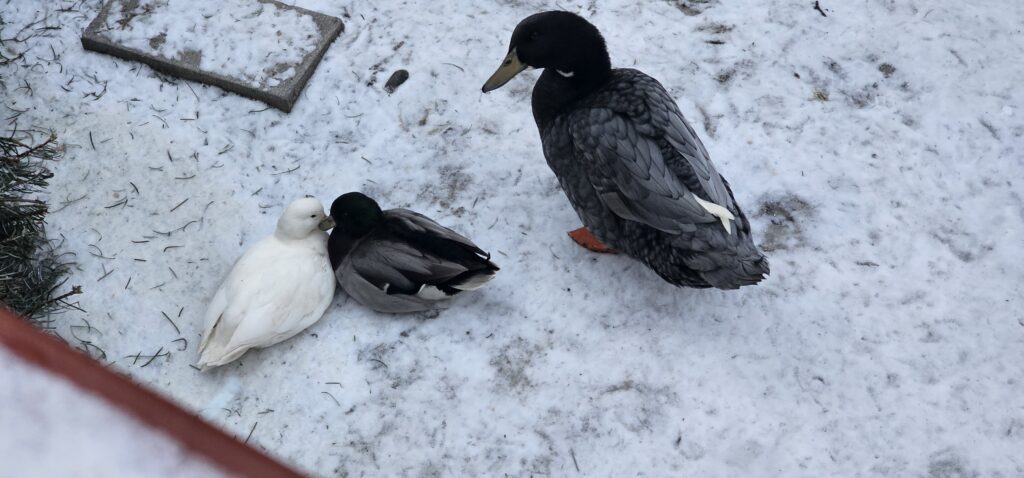
While it is true that ducks are very hardy animals, they are also not immune to the bitter cold of winter. There are some times when cold is TOO cold, especially if your duck isn’t “Waterproof”. You will see them shaking and that means that they are cold and are having a hard time staying warm. They can get cold just like we do, they are very warm blooded animals. Being waterproof is how they are able to regulate their temperature and why it’s important for them to have access to water at all times so they can keep spreading that oil on their feathers. This will keep them warmer.
Sometimes though it is still too cold for their feet and bill and they can get frostbite, which is very painful. They are not wild ducks and cannot migrate to warmer weather. It’s also important to give your duck cracked corn and enough proteins in their winter diet, to keep them even warmer. They will need a proper insulated shelter, that they can go back in at all time, if they choose to.
Safely Handling a Duck
Do not pick a duck up by its wings, neck, legs, or feet.
Approach calmly and support the body securely. Keep the wings gently against the duck’s sides while supporting its breast and body weight. Never squeeze the chest tightly. Birds need movement of the chest and sternum for normal breathing. Limit unnecessary restraint because excessive chasing and handling can be stressful.
Males, Females and Breeding Season
A male duck is called a drake, and a female is generally called a duck or hen.
Mixed-sex flocks require special attention during breeding season. Too many males can result in females being repeatedly chased and mated, sometimes causing feather loss, wounds, exhaustion, or serious injury.
A practical starting point is approximately one drake for at least three to five females, although the correct ratio depends greatly on breed and individual temperament. Some drakes may require even more females—or temporary separation during breeding season.
If you want eggs but do not intend to hatch ducklings, you do not need a drake. Females lay eggs without a male; the eggs simply will not be fertile.
Egg Laying
Provide females with a quiet, dry nesting area with clean bedding. Collect eggs frequently to reduce breakage and contamination. Egg production can place significant nutritional demands on females, particularly for calcium. Persistent soft-shelled eggs, difficulty laying, weakness, abnormal posture, or repeated reproductive problems should be discussed with an avian veterinarian.
How to sex a duck
It’s very easy ! Once your duckling is about a month old or so, if it is a drake he will have a very raspy, more quiet sound than the female. (If you notice some male ducks with female names that’s because the owners\ was not sure if the duckling was male or female. Most of the time we “assume” that our duckling is a female, hence why the male duck has a female name.)
The female on the other hand has a very pronounced, loud, typical quack ! that she used to call whoever she wants, to sound the alarm, to let everyone know she is broody. Her different quacks have different meanings 😉 After a while of keeping ducks, you can learn what each quack means. This is the female quack in the video below. Female ducks get their quack earlier than male ducks 🙂 It can take up to a month and a half to notice the male voice.
There is no other way, really, to know if your duckling will be a male or a female. DO NOT sex vent ! It’s dangerous and it’s painful for your duckling. You can really hurt them, or even kill them.
Companionship
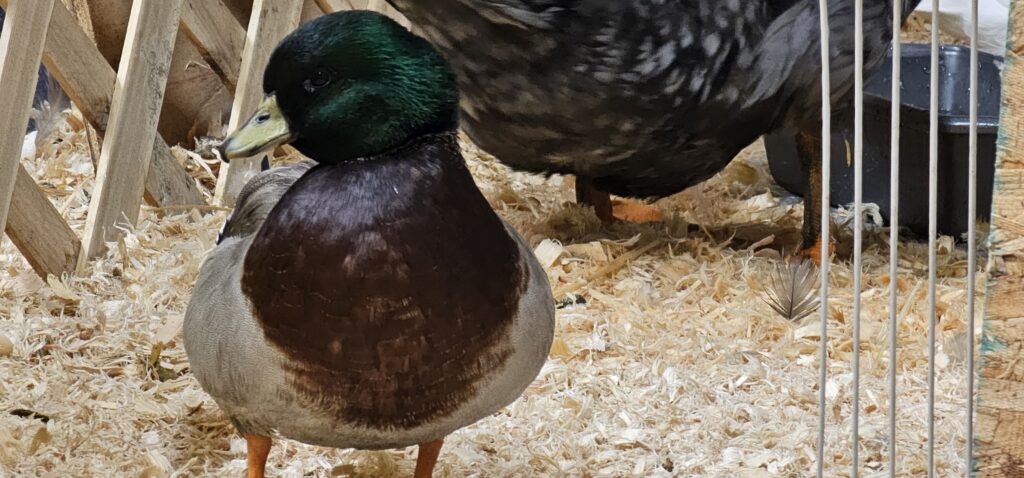
Ducks are highly social and generally should not be kept alone. Keeping at least two ducks gives them companionship and allows them to socialize naturally. Even ducks that are strongly bonded to their owners benefit from having another duck nearby.
They need at least a companion to live a happy life and thrive. If you have a drake you will need 2-3 females to satisfy your drake. Some drakes can be dominant, territorial and very horny. That’s just how some drakes can be. Reproducing is very important to them, like a lot of animals and sometimes they become “Jerk” about it. It’s not because they are bad ducks, it’s just what they are supposed to do or feel like they need to do.
Sometimes they will hurt a female duck by mating her repeatedly. It is not always the case, but more often than not it is. Not one duck is the same. You can keep multiple males together without a female with no problem, or just keep females together without a male. If you have a mixed flock of males and females then it is usually best to get 2-3 females for 1 male.
Ducks are very social animals, so they can also feel depression, loneliness. They can even stop eating if they become too depressed.
🌳 Exercise & Enrichment
Ducks should have room to walk, forage, explore, bathe, preen, and socialize. Grass, leafy greens, safe shallow pools, supervised exploration, and opportunities to search for food all provide useful enrichment.
The basics of good duck care are simple: companionship, proper nutrition, clean water, safe housing, predator protection, cleanliness, exercise, and daily attention.
Do Ducks Need a Pond?
No.
Ducks do not require a pond to survive or reproduce normally. Swimming water is not essential, although access to water for bathing or swimming can be beneficial. That does not mean ducks don’t enjoy it—they usually love it. A clean kiddie pool, livestock tub, or other safe bathing container can provide plenty of opportunity for:
Swimming • bathing • preening • splashing • cooling • enrichment
Make sure ducks can easily enter and exit whatever swimming container you provide.
Emergency Kit for duck care
Like I mentioned before, sometimes an avian vet or even a vet is not available. Many duck owners buy what is needed to treat their ducks at home. IF your duck is not eating, drinking, and seems lethargic then you absolutely will need to bring your pet duck to a vet. This means your duck is very sick and needs help asap.
Unfortunately with birds, they often tend to show signs of illness when they are already very sick. Keep an eye on your animal to make sure your duck is eating and drinking, washing, moving around. That means you have a healthy duck ! Otherwise if you notice your duck slowing down, laying a lot, not eating much, it is time to start looking for a vet.
Here is what you will likely need for a home care emergency.
- Vinyl exam gloves
- Disposable scalpel
- Tweezers
- Nail clippers
- medical grade scissors
- Quickstop – (You can also use flour if no quickstop available to stop bleeding)
- Epsom salt (For bumblefoot)
- Cotton swab
- Ky Jelly – Or Vaseline for egg binding
- Face pads
- Vet Wrap
- Waterproof tape
- Chlorhexidine solution
- Saline solution – For Eye injury
- Drawing Salve – Draw Splinter – Relieve pain – Cuts bruises
- terramycin ointment – eye injury
- Silver sulfadiazine cream for bumblefoot
- Eating something toxic – Olive oil – Activated charcoal pill (Crush feed syringe them)
- Vitamins electrolytes if they are sick and weak or Vitamin B Complex
- Probiotics
- Monistat for yeast infection
- Dawn dish soap – for Wet feathers
Don’t use blu kote no matter what people say about it! It’s a solution that will hurt your pet. It is not recommended at all. No hydrogen peroxide either ! Keeping a duck is more than just having a cute, fuzzy baby duck. It comes with many responsibilities and it can be very expensive. They can live a long, healthy life if we give them that chance.
Regular Health Checks
Spend a few minutes actually watching your ducks every day. You will quickly learn what is normal for each bird. That makes abnormal behavior much easier to recognize. Pay attention to appetite, water consumption, walking, breathing, droppings, feather condition, eyes, nostrils, feet, body condition, egg production, and whether an individual has separated itself from the flock.
Seek veterinary assistance promptly for warning signs such as:
- Difficulty breathing, gasping or persistent respiratory noises
- Inability to stand or sudden severe lameness
- Paralysis, tremors, seizures or twisted neck
- Severe weakness or inability to hold the head up
- Significant wounds or predator attacks
- Persistent inability to eat or drink
- Swollen joints or feet
- Severe diarrhea or blood
- Sudden dramatic reduction in egg production
- Straining or suspected egg-binding
- Multiple sick ducks at the same time
- Sudden unexplained death
Progressive weakness and limp paralysis, particularly an inability to hold the neck upright, can occur with botulism and warrants immediate veterinary attention.
Daily Duck Care Routine
Morning: Let the flock into its secure outdoor area, check every bird, provide fresh feed and clean water, collect eggs, remove obviously soaked bedding, and make sure everyone is walking and behaving normally.
During the day: Provide exercise, forage, shade or weather protection, bathing opportunities when appropriate, and social interaction. Refresh dirty drinking water as necessary.
Evening: Count every duck, perform another quick health check, remove spoiled food, refill water as needed, and securely lock the entire flock inside a predator-resistant shelter.
Regularly: Replace bedding, scrub water containers, clean pools, inspect fencing, check feet and body condition, control rodents, remove sharp objects and standing waste water, and examine the shelter for places predators might enter.
Biosecurity and new ducks
Do not immediately place newly purchased ducks into your established flock. New birds can appear perfectly healthy while carrying infectious disease. It is recommended to quarantine new ducks for observation before introducing them to an existing flock for at least 15 days. Wild birds can also spread disease. Keep domestic feed and drinking water protected from wild-bird contamination.
Dedicated coop boots, clean equipment, handwashing, pest control, and restricting unnecessary contact between your flock and unfamiliar birds are simple but valuable precautions.
The Most Important Rules of Duck Care
Keep ducks with other ducks. Feed a nutritionally complete diet. Give them abundant clean water. Keep their sleeping area dry. Protect them from predators. Give them room to exercise and behave naturally. Watch them every day. And when something suddenly seems wrong, take it seriously.
Ducks are messy. They require work. They can destroy a beautiful patch of grass remarkably quickly and turn clean water into muddy soup in what seems like minutes.
But they are also incredibly entertaining animals. Watching them forage, chatter together, splash in the water, nap in a little pile, and come running when they recognize you is a wonderful experience. When we make the decision to bring an animal home, we accept responsibility for providing that animal with a safe, healthy, fulfilling life—not only while it is tiny and adorable, but throughout its entire life.
Duck Health
Preventing Disease in Your Ducks.
Good husbandry prevents many problems before treatment is ever necessary. Biosecurity, appropriate vaccination where indicated, good nutrition, proper housing, ventilation, sanitation, and minimizing environmental stress as major components of duck disease prevention.
Keep feed dry, remove spoiled food, provide clean drinking water, change wet bedding frequently, quarantine new birds before introducing them to your flock, and avoid sharing contaminated equipment between flocks. Limiting contact between domestic ducks and wild waterfowl is especially important because wild birds can spread avian influenza and other diseases.
When It’s an Emergency
Seek veterinary help promptly if your duck:
Cannot stand, cannot breathe normally, is having seizures, has a twisted or limp neck, is bleeding, has severe diarrhea, is repeatedly straining to lay an egg, has been attacked by a predator, stops eating and drinking, or if several flock members become sick or die suddenly. Ducks often hide signs of illness until they are quite sick. Changes in appetite, drinking, activity, breathing, walking or normal behavior deserve attention.
Common Duck Diseases and Health Problems
Never Release Domestic Ducks Into the Wild
First of all, If you decide at some point that you do not want your animal anymore, it’s extremely cruel, irresponsible, and unethical to just dump them in a pond, lake or any body of water in your area. The animal you took responsibility for when you bought them at the store, will NEVER survive very long in the wild.
Domestic ducks are not WILD, never will be, they don’t belong in the wild. There is a big difference between wild and domestic. They do not have the capability or instinct to survive in the wild. The wild is harsh, full of predators waiting for an easy opportunity, and the weather is not their friend either. Domestic ducks often cannot fly because they are heavier than wild ducks.
Wild Mallard weight : 1.6 – 3 lbs ( That is very light for a duck in the wild, hence why they can fly to get away from predators.
Domestics Mallard called Rouen : 5-10 lbs !
Domestic ducks were bred for eggs and meat production, hence why they are heavier. Their wings are smaller, and cannot support their body weight to fly away from a threat. Is this what you really want for your duck ? The little, innocent, duckling that didn’t ask to be purchased, to be dumped ?
Do not encourage your tractor supply or feed store. They sell birds to just anyone who will buy them, even teenagers or people, that sometimes, will release them at the pond. As long as they sell them they do not care what happens to the animal.
Some people buy them from tractors, supply or feed stores just to release them at a pond or lake because they think the animal will have a better life in the wild than in captivity. If you absolutely want a duck, please find an ethical breeder online like Metzer farm, Meyer hatchery. It’s too tempting and easy to buy the cute duckling at the store, getting fed-up and dumping them later on.
As you can see, having a duck is not always easy. They are not for everyone, that’s for sure. Once you make the decision to get one, you have to think about the possibility of having health problems that might arise at some point. Are you willing to bring your duck to a vet ? Is there even a vet that will accept seeing your duck, in the area where you live ? A duck is a living, sentient being that has its own, unique personality.
The Consequences of dumping ducks in the wild.