Have you ever seen one of those cute duckling or gosling, found as a tiny baby, being raised by humans and then those same humans think that it’s a good idea to release the bird as an adult. They think “What’s best for the bird?” Well let me tell you that they couldn’t be more wrong about it. While you might think you are helping this cute little fuzzy bird that will follow you willingly, you are actually giving that bird a death sentence.
Releasing a young bird into the wild may seem like the natural and compassionate thing to do. After all, wild birds belong outdoors, and the ultimate goal for a healthy wild bird is usually to live independently in its natural habitat.
However, releasing a baby bird before it is physically and behaviorally ready can be extremely dangerous.
A young bird may look fully feathered and healthy while still depending on its parents for food, protection, communication, and lessons that humans cannot provide. Birds raised incorrectly by people can also become accustomed to humans. They fail to recognize their own species properly, or lack the skills needed to find food and avoid predators.
There is another important distinction: a healthy wild fledgling that naturally leaves its nest is not being “released.” It is going through a normal stage of development while its parents continue caring for it. In fact, removing that fledgling and trying to raise it yourself can make its situation worse. The U.S. Fish and Wildlife Service advises that healthy fledglings are generally best left where they are because their parents are usually nearby.
Understanding Nestlings and Fledglings
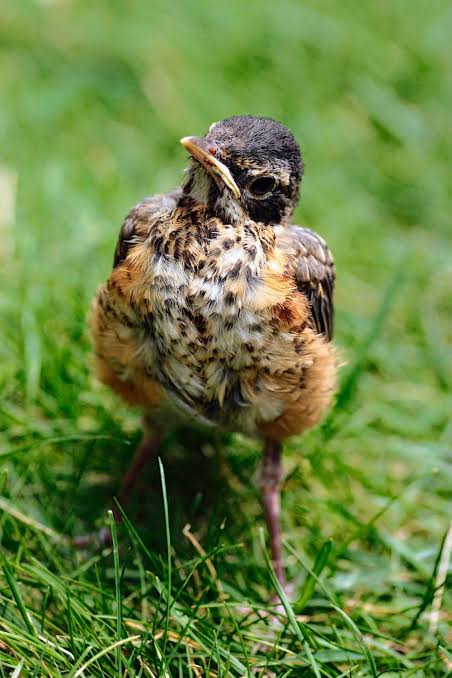
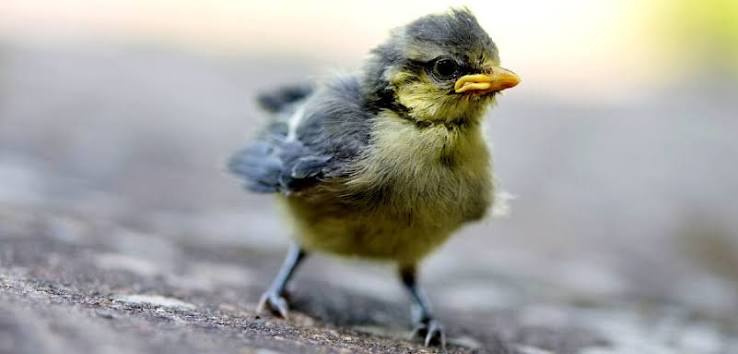
Before deciding whether a baby bird needs help. It is essential to understand the difference between a nestling and a fledgling. A nestling is very young. It may have little or no feathering, may have closed or partially opened eyes, and normally belongs in a nest. Nestlings are not ready to survive on the ground independently.
If an uninjured nestling has fallen from its nest, returning it to the nest is often the best option when that can be done safely. Contrary to a common myth, touching a baby bird generally will not cause its parents to reject it. A fledgling is older and mostly or fully feathered. It may hop, perch, flap, or make short flights without being capable of flying strongly.
Seeing a fledgling sitting on the ground can make people believe it has been abandoned.
Usually, it hasn’t. Many young birds deliberately leave the nest before becoming accomplished flyers. Their parents continue locating, feeding, protecting, and communicating with them while they develop their flight and survival skills. Taking one away can separate it from exactly the teachers it needs most—its parents.
When you raise a baby bird, you might think that you are doing them a favor by “Saving them” but when you release them later on to a “Wild Life” you are actually giving those birds a death sentence. Duckling, gosling, and other birds, will naturally “Imprint” and recognize (another animal, person, or thing)” as a parent of habitual trust. This baby animal that was raised by a human, does NOT have the awareness of what wild birds.
Baby birds are not aware of danger
They don’t know that they have to be afraid of humans, (Yes some humans are mean and will hurt birds for fun) They don’t know that they need to be aware of cars, predators, food sources, water… It doesn’t just come naturally. Everything the bird knows has been taught by it’s parents. Birds that have been raised by a human, that has given them food, water, shelter, care, love during their young lives, will automatically view that human as it’s parent.
They don’t know any better than what the human as been giving them. In the wild, the baby bird will become a juvenile bird. They eventually will leave the parent’s care to go look for a mate and raise it’s own family. The bird raised by a human, doesn’t have that, doesn’t know how to do that.
Why Releasing a Hand-Raised Baby Bird Can Be Dangerous
A baby bird that has been hand-raised is a very different situation from a naturally fledging wild bird. Simply reaching a certain age or growing feathers does not automatically mean the bird is ready for independence.
Professional wildlife rehabilitators assess much more than appearance.
Before release, a wild bird must be capable of performing the natural behaviors necessary for its species to survive. Wildlife rehabilitation standards may include demonstrating normal flight or movement, feeding independently, foraging or hunting appropriately, and responding properly to predators and other dangers. A bird released without those abilities may have very little opportunity to learn them afterward.
Take that baby bird two months later and what is it supposed to do ? Where are they supposed to find food and water ? They are not born with an intern map that tells them where water is, what food to eat, what to avoid, where to migrate, where to find a mate, where are safe nesting spots. It’s not no longer a natural instinct for them to find their food or water source. They weren’t raised with their mother to teach them those things, they were raised by a human.
It doesn’t come just naturally because they are animals, it’s learned through foraging for food with their mother in the wild and replicating everything their mother teach them. They don’t know to be aware of cars because they are dangerous. They don’t know what to fear, like birds of prey and where to hide.
Baby Birds Must Learn How to Find Food
Providing food in captivity is very different from finding food in nature.
A baby bird may learn that opening its mouth results in a human delivering food. That does not necessarily teach it where natural food is found, how to recognize it, how to capture it, or which foods are safe.
Different species require completely different skills. An insect-eating songbird must learn to locate and capture insects. A raptor has to develop hunting skills. Seed-eating species must recognize and process appropriate foods. Waterbirds may need to forage in water.
Parents teach or facilitate many of these behaviors during development. Releasing a bird that still expects humans to provide meals can result in starvation even when food exists all around it.
Strong Flight Is Essential
Being capable of fluttering across a room or flying a short distance does not necessarily mean a bird is prepared for life outdoors. In the wild, flight serves far more purposes than simply moving from one perch to another.
Birds may need to rapidly escape predators, maneuver through trees, travel between feeding areas, land accurately, keep up with parents or flocks, and—in migratory species—eventually travel enormous distances.
A young bird without sufficient muscle development, coordination, stamina, or landing ability can quickly become vulnerable.
This is one reason professional rehabilitation includes pre-release conditioning rather than simply opening a cage as soon as a bird begins to fly. California’s wildlife rehabilitation standards, for example, specifically describe pre-release environments that allow animals to demonstrate natural behaviors such as flying, swimming, predator avoidance, hunting, and foraging.
Predators Are a Major Danger
A young bird in the wild may encounter cats, dogs, hawks, owls, snakes, foxes, raccoons, and numerous other predators depending on the species and location. Wild-raised birds gradually learn how to respond to danger.
A human-raised bird may have a much more serious problem. If it has become comfortable around people, pets, or household noises, it may not react appropriately when danger appears. A bird that approaches people rather than fleeing may also place itself at risk of vehicles, pets, trapping, or intentional harm.
Wildlife rehabilitation therefore involves more than keeping an animal alive. Rehabilitators try to preserve the behaviors that make the animal wild.
Human Imprinting Can Prevent Release
One of the greatest risks when people raise baby birds themselves is imprinting. Imprinting occurs during a sensitive period of development when some birds learn who their parents are and, in some cases, what species they belong to.
This is particularly important in birds such as ducks, geese, turkeys, raptors, and other species vulnerable to inappropriate imprinting.
The Wildlife Center of Virginia explains that human-imprinted birds may identify incorrectly with humans instead of members of their own species. This can interfere with normal communication, social relationships, mate selection, and survival behaviors. Severely human-imprinted wild birds may become unsuitable for release.
Professional rehabilitators use techniques designed to reduce this risk, including minimizing unnecessary handling and raising young birds with members of their own species or appropriate surrogates whenever possible.
Habituation Is Also Dangerous
Imprinting and habituation are related but not identical. A bird can recognize that it is a bird yet still become far too comfortable around humans.
This is called habituation. A habituated wild bird may associate humans with food and intentionally approach people. That can become dangerous after release.
The U.S. Fish and Wildlife Service notes that rehabilitators take special precautions to prevent baby birds from becoming accustomed to receiving food directly from people because maintaining appropriate wild behavior is important for successful release. A truly wild bird should normally retain an appropriate degree of caution around humans.
Weather Can Kill an Unprepared Baby Bird
Baby birds can be extremely vulnerable to temperature and weather. A fully developed adult bird has feathers, body reserves, behaviors, and experience that help it cope with rain, cold, heat, and wind. A young bird may not.
Releasing a bird during poor weather or before its plumage and thermoregulation are sufficiently developed can expose it to chilling, dehydration, overheating, or exhaustion. Even a healthy bird may therefore require appropriate timing and environmental conditions before professional release.
Choosing the Wrong Release Location Can Be Dangerous
A bird cannot simply be released anywhere that looks green or natural. Different species require different habitats.
A wetland species does not necessarily belong in woodland. Grassland birds require different resources than forest birds. Some birds depend on particular foods, water sources, nesting areas, or members of their own species.
There may also be roads, outdoor cats, dogs, windows, power lines, pesticides, or other hazards near an otherwise attractive-looking location. For rehabilitated migratory birds, federal guidance requires recovered birds to be released into suitable habitat when conditions allow. Selecting an appropriate release site is therefore part of wildlife rehabilitation—not an afterthought.
The Bird May Still Need Its Parents
Perhaps one of the most common mistakes is assuming that a feathered baby bird no longer needs parental care. Young birds often leave their nests before they are completely independent. Parents may continue feeding fledglings for days or longer depending on the species.
They also provide something humans cannot fully reproduce: exposure to the normal behaviors of their species. A fledgling found hopping beneath a tree may therefore be exactly where nature intended it to be.
Audubon and wildlife agencies consistently advise leaving healthy fledglings alone unless they are in immediate danger. If necessary, they can sometimes be moved only a short distance into nearby vegetation where their parents can still locate them.
When a Baby Bird Really Does Need Help
There are situations when intervention is appropriate.
Contact a licensed wildlife rehabilitator when a baby bird is clearly injured, bleeding, unable to stand normally, has a drooping or obviously broken wing, has been caught by a cat or other predator, is shivering or lethargic, or when you are certain its parents are dead or no longer caring for it.
While obtaining professional advice, avoid trying to force food or water into the bird. Improper feeding can send food or liquid into the respiratory system and cause serious harm. Audubon and wildlife rehabilitation organizations recommend professional guidance rather than attempting to feed an injured or orphaned baby bird yourself.
Do Not Assume a Bird on the Ground Has Been Abandoned
One of the best ways to protect baby birds is surprisingly simple: Observe before intervening. Parents may deliberately stay away while a person is standing close to their young.
Watching quietly from a considerable distance gives the adults an opportunity to return. A healthy fledgling hopping around, calling, perching, and showing no obvious injuries probably does not need to be rescued. Removing such a bird can turn a normal stage of development into an actual emergency.
Ducklings and Goslings Need Special Consideration
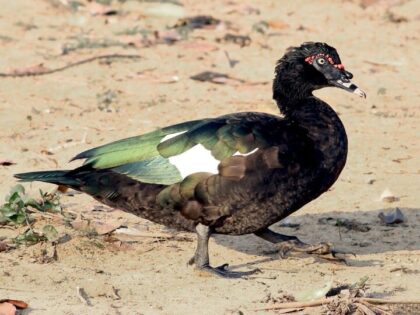
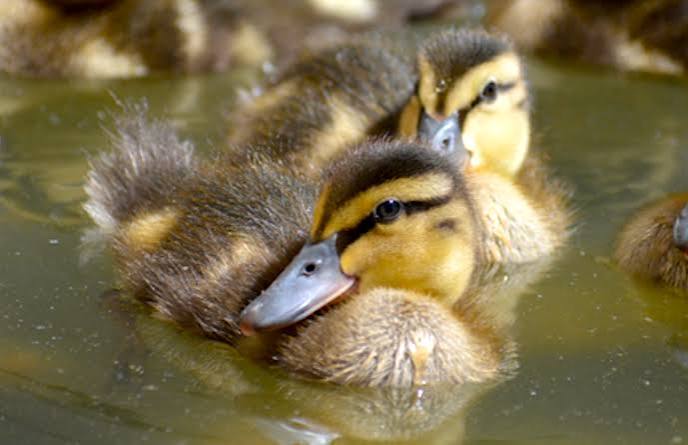
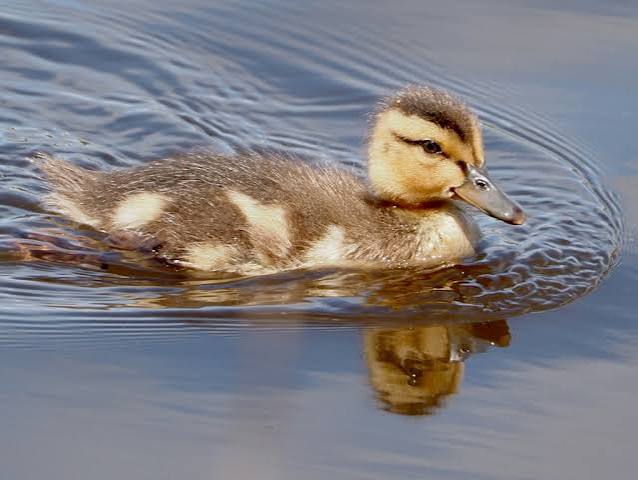
Baby ducks and geese are different from many songbirds because they leave the nest very soon after hatching. They follow their parents and learn where to feed, rest, hide, and avoid danger. A lone duckling or gosling should not simply be placed into a pond because water is available.
If its known family is nearby, wildlife authorities recommend attempting to reunite the youngster with its parent and siblings, while observing from a safe distance to make sure it is accepted. If reunification fails, a wildlife rehabilitator should be contacted.
Hand-raised ducklings and goslings are also particularly vulnerable to imprinting on humans. That can make later release considerably more complicated.
Domestic Birds Should Not Be Released Into the Wild
There is another important distinction between wild birds undergoing rehabilitation and domestic or captive pet birds. A domestic duck, goose, chicken, pigeon breed, parrot, budgie, cockatiel, or other captive-raised bird should never simply be abandoned outdoors under the assumption that it will learn to survive.
Domestic birds may lack effective predator avoidance, may depend heavily on people for food and shelter, and may be poorly adapted to the local climate. Released non-native birds can also cause ecological problems. If someone can no longer care for a domestic bird, the responsible option is to find an appropriate rescue, sanctuary, not to release it.
Wildlife Rehabilitation Requires Expertise
Raising baby wildlife is far more complicated than keeping an animal warm and feeding it.
Diet, feeding frequency, species identification, housing, sanitation, social development, feather condition, disease prevention, flight conditioning, predator avoidance, and release timing can all affect the bird’s chances of survival.
There are also legal considerations. The U.S. Fish and Wildlife Service also requires federal authorization. Good intentions do not replace specialized knowledge.
If a wild baby bird genuinely needs human care, contacting a licensed wildlife rehabilitator gives it the best opportunity to receive appropriate treatment and eventually return to the wild.
The Goal Is More Than Keeping a Bird Alive
Successful wildlife rehabilitation is not simply about getting a baby bird through its first few weeks. The real goal is producing a bird capable of living without human assistance. Before release, it must be physically healthy, able to move normally, capable of feeding itself, appropriately wary of danger, properly socialized for its species, and prepared for the habitat into which it will return.
A bird that survives captivity but cannot function independently has not truly been prepared for release. That is why releasing a young bird too early can undo weeks or months of otherwise successful care. I’ve seen it so many times on GeoBeat, The Dodo and all those sites that show you a cute video and story of human raising baby birds then releasing them in the wild.
Glorified stories that don’t bring awareness to the problem
I actually have followed up on those stories and most if not all, are met with an horrible fate. Yes, VERY FEW, are successful where the bird find a mate and raised it’s own family but it’s very rare.
This guy, takes gosling out of the wild, thinking he is helping them when in fact, he lets them free to go when they are adults. They get hurt when they are able to fly. He is not even a licensed Wildlife rehabilitator and should not even be interfering with wild migratory birds according to the migratory act. As long as his story gets clicks and you click on it and help making the news sites money, that’s all that matter it seems, common sense thrown out the window for everyone involved.
The bird ended up being hurt and lost a wing and then who knows what happened to her. He suddenly stopped posting about Waddle and later on. He started posting about another Canada Goose he “rescued” while having no idea what he is actually doing since he doesn’t have an actual license in rehabilitation.
We need to stop encouraging, glorifying, and giving attention to these stories where the animals are suffering horrible fate at the hands of humans.
The cruelty of abandoning them to their fate
It’s cruel and inhumane to raise them and think they will just happen to know how to survive in the wild without ever been taught how to. He thinks he is now an expert and people bring birds to him…Once a bird has been raised by humans, it no longer is a wild bird, it’s a domesticated one. It becomes a captive, human raised bird that has lost ALL his natural instinct that it normally would get from it’s mother.
It’s not cute at all when the duck or goose dies later because of irresponsible people. Humans have now taken matters into their own hands and think raising a duckling or gosling as cute as they are, can just be released back to nature later. Stop doing this. If you really care about the animal, you need to keep it for its whole life. Spread the word and awareness about releasing baby birds back to the wild. I assure you the bird won’t survive for very long.
If you are an animal lover, we need to start raising our voices and tell people to stop doing that. Some have success stories of course, but they are very rare. The majority of those birds released by in the wild don’t live very long after being released. It’s very cruel. A lot of those birds are also protected under the Migratory Birds Act. It is actually illegal to remove them from the wild and take them home to raise them.
The best thing to do
The best thing to do in those case if the bird is in danger of dying, is it find it a permanent place where the bird will live a happy life with other birds of it’s kind. A rehabilitation center where the bird will be released back later with MINIMAL human interaction. Or a sanctuary where it will live happily for the rest of it’s life with others animals.
Think about the future of this poor baby released into the unknown, where it has never lived before and doesn’t know where to go and how to live. They deserve better than the horrible faith they suffer at our hands. I understand that a lot of people try to help these babies, but they are doing it wrong. A rehabilitation center, a permanent home or a sanctuary really is the best place for these poor babies to ensure a safe and long life.
Final Thoughts
Wanting to give a baby bird freedom is understandable. But freedom without preparation can quickly become danger.
A baby bird released too soon may be unable to find food, escape predators, tolerate weather, interact normally with its own species, or recognize hazards. A bird that has become imprinted or overly comfortable with humans may face even greater difficulties. At the same time, healthy wild fledglings normally belong outside. A young bird on the ground is not automatically an orphan and should not automatically be taken into captivity.
The safest approach is to understand what stage of development the bird has reached, observe before intervening, reunite young birds with their parents whenever possible, and involve a licensed wildlife rehabilitator when professional care is genuinely necessary. When it comes to wildlife, helping sometimes means providing care. And sometimes, helping means knowing when to leave a young bird with the parents who know how to teach it to be wild.